
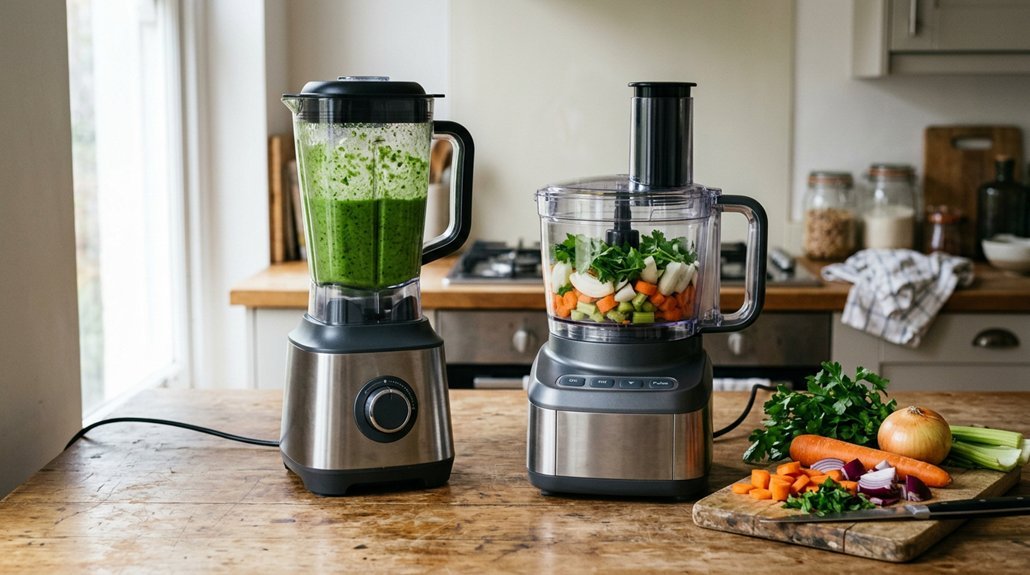
A blender and a food processor may seem interchangeable, but their designs suit different tasks. A blender’s tall jar is built to create a vortex, which works well for smooth soups, frozen drinks, or silky sauces. A food processor’s wider, flatter bowl is designed for tasks like chopping onions, shredding cheese, or making pie dough, where control and even texture matter more than liquid movement.
The overlap between the two appliances is smaller than it might seem. Blenders generally struggle with dry or dense ingredients that need precise, short pulses, while food processors are not built to handle thin liquids the way a blender jar can. Understanding this distinction can help narrow down which tool fits your typical kitchen tasks before comparing specific models.
Key Takeaways
Blender vs Food Processor: Which One Do You Need?
Blenders and food processors both handle food preparation, but they are built for different tasks. Understanding what each one does well can help you decide which one fits your kitchen habits, or whether you need both.
When a Blender Is the Better Choice
A blender is designed for smooth, pourable results. This includes smoothies, soups, sauces, milkshakes, and frozen drinks, where the goal is a consistent liquid or semi-liquid texture.
Blenders typically use tall jars paired with fast-spinning blades that create a vortex, pulling ingredients down toward the blades. Based on this design, blenders tend to perform well with liquid-heavy ingredients and ice, since the motion keeps everything moving through the blades.
When a Food Processor Is the Better Choice
A food processor is built for tasks that require controlled texture rather than a fully liquefied result. This includes chopping, slicing, shredding, grating, and mixing dough.
Food processors generally use wide bowls along with S-blades and interchangeable discs, which the listed specifications indicate are meant for handling vegetables, cheese, breadcrumbs, pesto, and larger batches of prep work. The wider bowl shape also allows for more even processing of solid ingredients compared to a narrow blender jar.
Key Differences in Design
The main distinction comes down to jar or bowl shape and blade design. Blenders rely on a narrow, tall container and blade speed to force liquid movement, while food processors use a broader bowl and blade or disc attachments suited to solid food prep.
This difference in design is why each appliance tends to excel at different jobs rather than one being a strict upgrade over the other.
Where Each Tool Falls Short
Neither appliance fully replaces the other. Based on the specifications, blenders generally struggle with dry chopping tasks, since the blade motion depends on liquid or semi-liquid content to function efficiently.
Food processors, on the other hand, rarely produce a truly silky liquid texture, since their blades and bowl shape are optimized for solid or semi-solid ingredients rather than continuous blending.
If you are deciding between specific models rather than just the general category, Better Buy Picks also has comparison guides that look at capacity, wattage, and attachment options across popular blenders and food processors.
Blender vs Food Processor: The Quick Answer
A blender is better suited to silky smoothies, creamy soups, sauces, or frozen drinks.
A food processor makes more sense for chopping vegetables, shredding cheese, slicing potatoes, or mixing dough.
In short, a blender is designed for smooth results from liquid-heavy recipes, while a food processor is designed for fast prep work and control over texture.
A more powerful motor generally helps either appliance handle tougher ingredients with less strain, though this can vary by model. Food processors often include Auto-iQ preset programs and interchangeable blades or discs that make switching between chopping, slicing, and shredding tasks quick and consistent.
What’s the Difference Between a Blender and Food Processor?
The main difference comes down to how each appliance moves ingredients around its blades.
Blenders rely on tall, narrow jars paired with fast, angled blades that create a vortex, pulling ingredients down toward the blade repeatedly. This design is generally well suited to crushing ice and producing smooth, pourable liquids. Blender motors typically range from 700–1400 watts, giving them the power needed to break down ice and fibrous ingredients into a uniform liquid.
Food processors use wide, shallow bowls along with interchangeable discs and S-blades. Based on these specifications, this setup is designed for controlled chopping, shredding, and slicing rather than liquefying.
Because of these differences, blenders tend to produce silkier results with smoothies, soups, and sauces. Food processors are typically better suited to dry or bulky ingredients, since their wider bowls and blade shapes allow for more even chopping instead of reducing everything to a uniform paste.
When a Blender Is the Better Choice
A blender is the right tool when a recipe needs to end up smooth and pourable, not just chopped into smaller pieces. Smoothies, soups, sauces, and milkshakes fall into this category, since their texture depends on ingredients being fully liquefied rather than broken into chunks.
Based on the specifications typically listed for high-speed blenders, these models are designed for tasks like crushing ice, processing frozen fruit, making nut milks, and creating stable emulsions. Their motor power and blade design tend to handle these jobs more effectively than a standard food processor. Product roundups and buying guides often highlight these same specifications when comparing top-rated blenders against one another.
Personal-sized blenders are worth considering for single servings, since their smaller jars and compact footprint suit individual smoothies or shakes. Pitcher-style blenders with side handles are generally easier to pour from without dripping, which matters for larger batches or shared servings.
When comparing blenders and food processors, the deciding factor is usually texture: reach for a blender when the goal is smooth and liquid, and consider a food processor when the recipe calls for chopped, shredded, or coarsely blended results instead.
When a Food Processor Is the Better Choice
For recipes that need distinct pieces rather than a silky finish, a food processor is generally better suited to the task than a blender.
- S‑shaped blades are designed for pulsing chunky salsa, pesto, or crumbs, giving more control over texture than continuous blending.
- Slicing and shredding discs handle cheese, potatoes, and cucumbers in larger batches, which is useful for meal prep or entertaining.
- Many models can knead pastry or bread dough without requiring extra liquid, a task blenders aren’t designed for.
The wider bowl and feed tube common to food processors can also reduce prep time compared to working in smaller batches. If dough kneading is a priority, though, a dedicated stand mixer with a dough hook attachment often handles heavier or stickier batches with less strain on the motor.
Can a Blender or Food Processor Replace the Other?
Can a Blender or Food Processor Replace the Other?
One appliance can sometimes fill in for the other, but the results depend on the task. Based on the listed specifications, a blender is better suited to liquid-based recipes like soups, since its blade design and container shape are built for continuous liquid movement. A food processor is generally designed for denser, drier tasks that require chopping or shredding rather than liquefying. Unlike some kitchen appliances that use fuzzy logic technology to automatically adjust settings for different ingredients, most blenders and food processors rely on manual speed and blade selection to achieve the desired texture.
| Task | Best tool | Result |
|---|---|---|
| Smoothies | high-speed blender | Silky |
| Shredding | food processor | Even |
For smoothies, a high-speed blender tends to produce a smoother, more consistent texture because it’s designed to break down ice and fibrous ingredients into a uniform liquid. For shredding vegetables or cheese, a food processor’s interchangeable discs are designed to create even, uniform pieces that a blender’s blade assembly typically cannot replicate.
Improvising with one appliance in place of the other is possible for occasional use, but capacity and texture limitations often show up quickly. A blender jar may not hold enough for large batches of shredded ingredients, and a food processor’s blade may struggle to fully liquefy softer, watery ingredients the way a blender can. If you’re deciding between the two for regular use, comparing capacity, blade types, and intended tasks side by side can help clarify which one fits your kitchen habits better.
Frequently Asked Questions
Should I Get a Blender or a Food Processor?
Choose a blender if you mainly make smoothies, soups, sauces, or frozen drinks, since its blades and jar are built for liquids and crushing ice. Choose a food processor if you need to chop, slice, shred, or mix dough, since its interchangeable blades and discs handle solid foods more effectively. If you can only buy one appliance, a blender usually offers more everyday flexibility for most households, especially if smoothies or soups are a regular part of your routine. However, if your cooking involves a lot of prep work like chopping vegetables or shredding cheese, a food processor may suit your needs better. Consider how you cook most often before deciding, since the right choice depends on your typical recipes and kitchen habits rather than one appliance being better overall.
What Can a Blender Do That a Food Processor Can’t?
A blender can create ultra-smooth textures that a food processor generally cannot achieve. Its fast-spinning blades and tall, narrow jar produce a strong vortex that continuously pulls ingredients down into the blades, which allows it to fully break down fibrous produce, ice, and nuts into a consistent, smooth result. This makes blenders better suited for smoothies, silky soups, pourable sauces, crushed-ice drinks, and finer nut butters. Food processors, by contrast, are designed for chopping, slicing, and shredding rather than liquefying, so they often leave a coarser or grainier texture with these tasks. Actual performance can vary depending on the specific blender model and motor strength, but in general, blenders are the better choice when a smooth, uniform consistency is the goal.
Do I Need Both a Blender and Processor?
No, you don’t need both unless your cooking habits call for each tool’s specific strengths. A blender is best for smoothies, soups, sauces, and other liquid-based tasks that require smooth, consistent textures. A food processor handles solid foods better, such as slicing vegetables, shredding cheese, chopping nuts, or mixing dough.
If you mostly prepare drinks, soups, or purees, a blender alone will likely cover your needs. If you frequently prep solid ingredients for meals, a processor may be more useful. Many home cooks who do a mix of both eventually find value in owning each appliance, since trying to use one for the other’s job often gives less consistent results depending on the model.
Can I Use My Regular Blender as a Food Processor?
Yes, but with limitations. A regular blender can handle small batches of sauces, dips, hummus, and rough chopping if you add enough liquid and pulse in short bursts. It’s not built to slice, shred, knead dough, or process dry ingredients like a true food processor, since it lacks the wide bowl and specialized blades needed for those tasks. Overfilling the pitcher or running it continuously can also lead to uneven results or strain the motor. For quick sauces or purees, your blender will work fine. If you need to grate cheese, slice vegetables, or mix thick dough, a food processor is the better tool for the job.