
Blender vs Food Processor: Which One Do You Need?
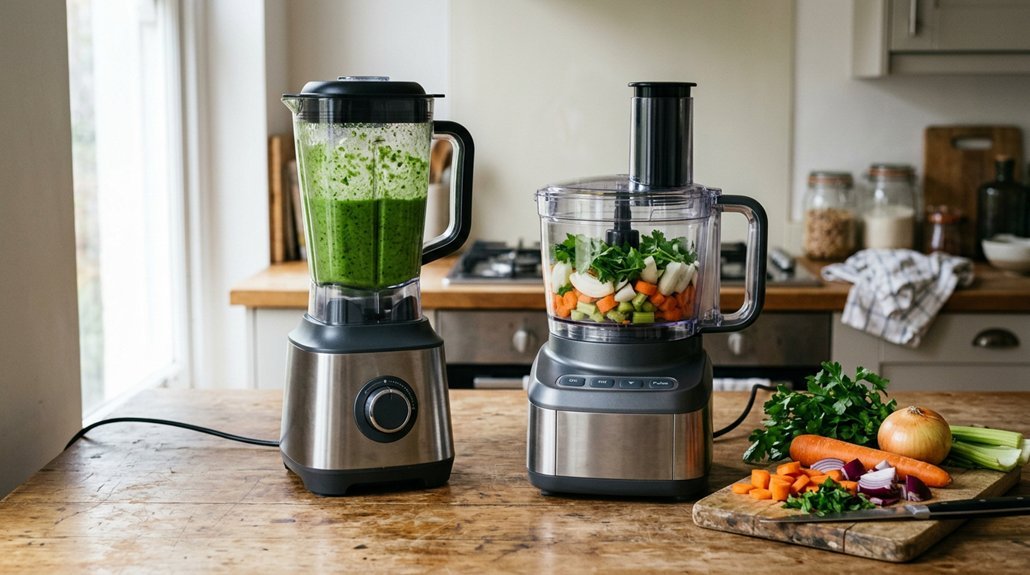
A blender and a food processor may look like they overlap, but the two tools are built for different tasks. A blender's tall jar creates a vortex that pulls ingredients down into the blade, which is better suited to smooth soups, frozen drinks, or silky sauces. A food processor uses a wide, shallow bowl with interchangeable blades and discs, which gives more control for chopping onions, shredding cheese, or making pie dough.
The main difference comes down to consistency versus control. Blenders are designed to fully liquefy ingredients, so they excel when you want a uniform, pourable result. Food processors are designed to cut, slice, or pulse ingredients while keeping some texture, which matters for recipes where you don't want everything reduced to liquid.
Where the two appliances overlap is smaller than many people expect. Some food processors can handle thicker purees or dips, and some blenders come with add-on attachments for light chopping, but neither is built to fully replace the other. If your cooking regularly calls for both silky textures and precise chopping, you may end up needing both appliances rather than choosing one.
For a closer look at how specific models compare on capacity, controls, and cleanup, see our full blender and food processor buying guides.