
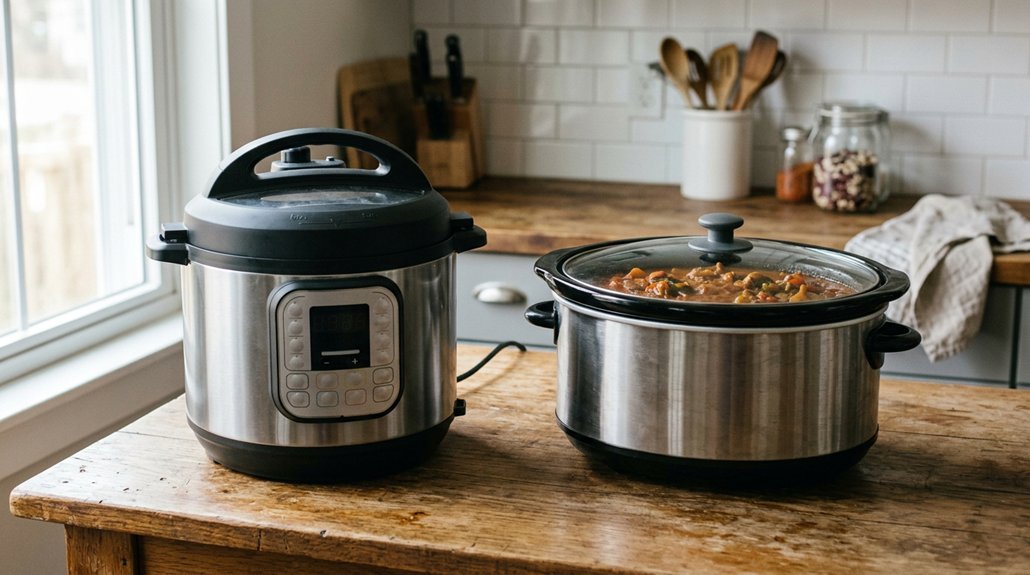
Choosing between a pressure cooker and a slow cooker mainly depends on your schedule and the meals you cook most often. Based on how each appliance works, a pressure cooker can turn dry beans, stew meat, or a roast tender in under an hour, while a slow cooker is designed for loading ingredients in the morning and returning to a finished meal later in the day.
Both approaches can produce solid comfort food, but the cooking process is quite different. A pressure cooker relies on sealed, high-pressure steam to speed up cooking, while a slow cooker uses low, steady heat over several hours to gradually break down ingredients.
The more practical question is how you want dinner to fit into your day. If you prefer quicker turnaround and don’t mind monitoring the cooking process, a pressure cooker may suit your routine better. If you’d rather set up a meal in advance and let it cook unattended, a slow cooker is generally the better fit.
Key Takeaways
A pressure cooker is better suited to fast meals, turning beans, stews, and roasts into dinner in roughly 30 to 60 minutes.
A slow cooker is designed for hands-off cooking, letting food braise gently for 4 to 10 hours while you’re away from the kitchen.
Based on the specifications of most pressure cookers, many models can sauté and brown ingredients in the same pot, which can reduce prep time and cleanup compared to using separate pans.
Slow cookers are generally better suited to tender pulled meats, long-simmered stews, and meals timed to finish around dinner, since the extended cook time allows tougher cuts to break down.
A multi-cooker is worth considering if you want both methods in one appliance, along with additional functions such as sauté, steam, and Keep Warm settings.
Pressure Cooker vs Slow Cooker: Quick Answer
The choice comes down to schedule and texture. A pressure cooker turns beans, braises, soups, and stocks that normally take hours into meals in about 30 to 60 minutes, using sealed pressure to speed up cooking.
A slow cooker gently simmers food over 4 to 10 hours with almost no attention needed once it’s set.
For pressure cooker vs slow cooker, pressure cooking suits anyone short on time who still wants a fully cooked meal within the hour. Slow cooking suits anyone who prefers to start a meal in the morning and come home to dinner ready.
Electric pressure cookers generally have removable, dishwasher-safe inner pots, which simplifies cleanup compared to some slow cooker models. Many modern pressure cookers also include multiple cooking functions like sauté and steam, allowing them to handle tasks a slow cooker simply can’t. Trade-offs exist on both sides: pressure cookers require monitoring release valves and seals, while slow cookers take significantly longer and offer less control over texture in dishes that benefit from browning or reduction.
Pressure Cooker vs Slow Cooker: Key Differences
Both appliances can turn tough cuts and pantry staples into comforting meals, but they get there in different ways.
Based on the mechanics of each, high-pressure steam shortens cook times in a pressure cooker, while the gentle, steady heat of a slow cooker supports a set-and-forget approach to dinner.
Pressure cooking also tends to support sautéing and browning, since higher heat can create that seared texture on meats before or during cooking.
Slow cooking, by contrast, works with recirculating moisture, which usually keeps sauces lighter and lets foods braise gradually over several hours. Many slow cookers also offer multiple heat settings like Low, Medium, and High, giving cooks more control over how gently or quickly a dish comes together.
Choose a Pressure Cooker for Fast Meals
A pressure cooker suits situations where dinner needs to happen soon, not after a full afternoon of gentle bubbling. Stews, roasts, and dried beans that normally take hours can often be ready in 20 to 40 minutes.
Models like the Instant Pot let you sauté meat directly in the pot before switching to pressure cooking, so the whole meal comes together in one vessel. This can cut down on extra dishes compared to methods that require a separate skillet.
The shorter cook time also means less time for colors and nutrients to break down, which can matter for vegetables and legumes. Before relying on a pressure cooker for a specific recipe, check the release instructions, since quick-release and natural-release methods affect both timing and texture. If speed is the priority, it’s worth comparing a pressure cooker’s cook times to those of air fryers, another appliance built around quick meal prep.
If you’re comparing pressure cookers to slower methods for a specific type of meal, our slow cooker buying guide covers when that approach makes more sense.
Choose a Slow Cooker for Hands-Off Cooking
A slow cooker suits cooks who want to start a meal in the morning and come home to something finished. The low, steady heat is designed for hands-off cooking, gently tenderizing stews and pulled meats through moist braising over several hours.
Most models include a Keep Warm setting, which is meant to hold food at a safe serving temperature once cooking is complete. This can be useful for staggered mealtimes or when timing dinner around a schedule. Similar to how countertop dishwashers offer a delay start feature to fit busy schedules, many slow cookers include this same option for added flexibility.
Browning meat separately before adding it to the slow cooker is a common technique for building flavor, since the appliance itself doesn’t sear. Adding lemon juice or vinegar near the end of cooking is another way to brighten a dish that has cooked for a long time, since slow, moist heat can mute sharper flavors.
When comparing models, pay attention to capacity, insert material, and control type, since these affect how a slow cooker fits into daily use. For a closer look at specific models, see our related Better Buy Picks guides on slow cooker capacity and features.
Pick the Cooker That Fits Your Routine
Your daily schedule is a useful starting point for choosing between these two appliances. Based on typical cook times, a pressure cooker is generally better suited to preparing a stew, roast, or pot of dried beans in about 30 to 40 minutes. A slow cooker fits routines where meals can be prepped in the morning and left to braise for 6 to 8 hours while you are away from home. If you want a single appliance that covers both approaches, some multi-cookers offer 9-in-1 functionality that combines pressure cooking, slow cooking, and other modes in one unit.
| Need | Choose | Benefit |
|---|---|---|
| same-day meals | pressure cooker | faster cook times for last-minute planning |
| set-and-forget | slow cooker | dinner is ready without monitoring |
Neither option is better overall; the right choice depends on how much lead time you have before dinner and how much attention you want to give the cooking process. If you are deciding between specific models, our comparisons of pressure cookers and slow cookers can help narrow down features like capacity and controls.
Frequently Asked Questions
Is It Healthier to Pressure Cook or Slow Cook?
Pressure cooking is generally the slightly healthier choice because the shorter cook time and reduced water use help preserve more heat-sensitive nutrients, like vitamin C and B vitamins, that can otherwise break down or leach out during long, liquid-heavy cooking. That said, slow cooking still produces nutritious meals, especially for dishes with tougher cuts of meat or fibrous vegetables that benefit from extended cooking to break down properly. The nutrient difference between the two methods is usually small and depends on the specific food, so neither method is unhealthy. Choose pressure cooking when you want to save time and preserve more nutrients, and choose slow cooking when you want deeper flavor and tender results, especially for stews, roasts, and dishes that improve with hours of simmering.
What Are the Downsides of Using a Pressure Cooker?
The main downsides of using a pressure cooker include a learning curve for new users, the need for enough liquid to build steam, and a higher risk of overcooking food if timing is off. You also lose the ability to brown ingredients or reduce sauces during cooking, since the sealed environment traps moisture instead of evaporating it. Improper sealing or releasing pressure too quickly can cause hot steam to escape suddenly, so extra care is needed when opening the lid. Depending on the model, some units may also require more attention to valve maintenance and gasket condition to function safely and consistently.
Is It Better to Have a Slow Cooker or Pressure Cooker?
Neither is universally better; it depends on how you like to cook. A slow cooker is better if you want hands-off meals that simmer for hours while you’re at work, using low heat and long cook times to tenderize ingredients gradually. A pressure cooker is better if you need dinner ready quickly, since it cooks food faster using pressurized steam, and many models also offer versatile functions like sautéing or steaming. If your schedule allows for planning ahead, a slow cooker can be convenient. If you tend to decide on dinner last minute or want one appliance for multiple cooking methods, a pressure cooker may suit you better. Some households find value in owning both, using each for different meals or occasions depending on time and convenience.
Which Type of Cooker Is Best for Health?
The pressure cooker is generally the healthiest option because its shorter cooking times help preserve more vitamins, antioxidants, and nutrients that can otherwise break down with prolonged heat exposure. Cooking food quickly under pressure also means less water is typically needed, which reduces the loss of water-soluble vitamins that often leach out during longer cooking methods.
That said, a slow cooker can be a good choice when you want tender, collagen-rich meals, since the low, steady heat breaks down connective tissue in meats over time. Both pressure cooking and slow cooking are generally considered better for health than frying, since they don’t require large amounts of added fat or oil. The best option often depends on the specific food being prepared and your personal dietary goals.