
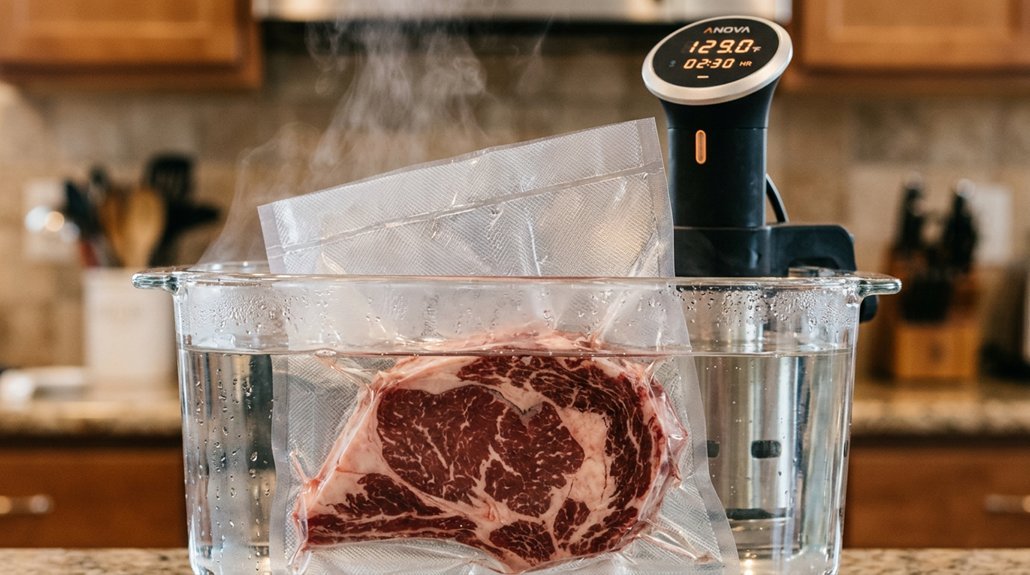
You’ve probably heard chefs rave about sous vide, but what’s actually happening inside that water bath? It’s a precise, science-backed cooking method that delivers results most stovetop techniques simply can’t match. We’ll break down exactly how it works, what gear you actually need, and why your food stays juicy instead of drying out.
Key Takeaways
- Sous vide seals food in an airtight bag, then submerges it in a precisely temperature-controlled water bath for even cooking.
- Constant water convection circulates heat uniformly, eliminating hot and cold spots that cause uneven doneness.
- Removing air from the bag prevents insulation gaps, ensuring efficient heat transfer directly to the food’s surface.
- Temperature and time work together to determine doneness and safety, enabling precise pasteurization without overcooking.
- Compared to conventional methods, sous vide maintains temperature within ±0.1°C, delivering edge-to-edge doneness and up to 19% higher yield.
What Is Sous Vide Cooking?
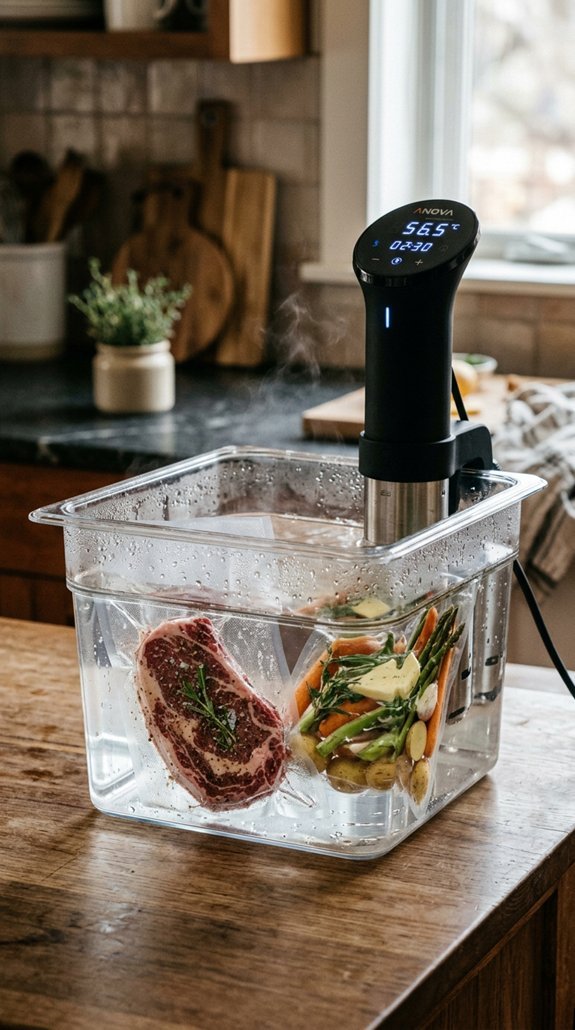
If you’ve ever cut into a perfectly cooked steak at a nice restaurant and wondered how the chef nailed that edge-to-edge, even doneness, there’s a good chance sous vide had something to do with it. The term is French for “under vacuum,” and its historical origins trace back to the 1970s.
You seal food in an airtight bag, submerge it in a precisely temperature-controlled water bath, and let culinary chemistry do its thing. And unlike conventional cooking, sous vide holds temperature constant, giving you consistent, repeatable results every time. Simple concept, surprisingly powerful results!
Once a technique reserved for high-end restaurants, sous vide has been increasingly added to menus across the culinary world as more chefs and home cooks recognize its precision and consistency.
How the Sous Vide Water Bath Heats Food Evenly
Now that you know the basics of what sous vide is, let’s look at why the water bath itself is such an effective cooking environment.
Water convection keeps heat circulating constantly, eliminating the hot and cold spots you’d find in oven cooking.
And because bag immersion keeps food fully submerged, every surface stays exposed to the same temperature.
The bath holds at your exact target, so food heats evenly to that point without overshooting it.
Temperature swings stay under 0.1°C in quality systems.
Consistent circulation, full submersion, and a stable bath work together to make overcooking genuinely difficult! Unlike indoor grilling methods that rely on adjustable temperature controls to prevent oils from reaching their smoke point, sous vide maintains precision through water rather than direct heat. Covering the bath reduces circulator workload and helps maintain that stability, especially on longer cooks. Covered bath reduces circulator workload and temperature fluctuations, as noted by Douglas Baldwin.
Why Sealed Bags Matter in Sous Vide Cooking
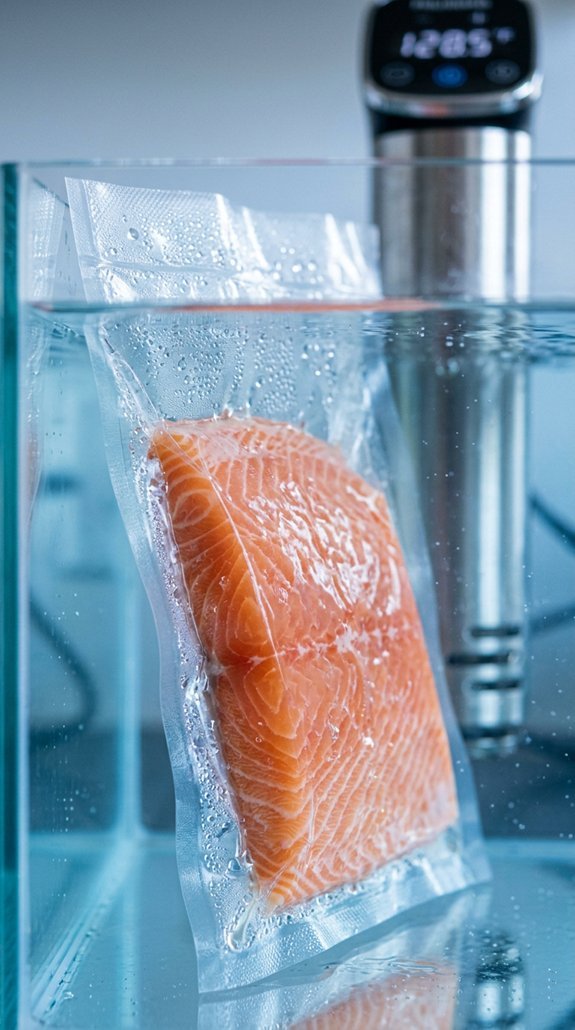
The sealed bag isn’t just a container; it’s doing real work throughout the entire cook. Airtight packaging keeps bath water out, so dilution never weakens your food’s natural juices or marinades.
The bag isn’t passive — it actively protects your food’s natural juices from start to finish.
It also removes air pockets that would otherwise insulate food from the heated water, slowing heat transfer and causing uneven cooking.
And flavor retention gets a real boost here. Sealed bags trap moisture, fats, and seasonings directly around the food instead of letting them escape into the bath.
Better sealing also means safer storage if you’re cooking ahead and chilling food for later use. In professional kitchens, vacuum sealing extends holding time both before and after cooking, making it especially valuable for high-volume meal preparation.
For home cooks pursuing sous vide, machines with pulse vac mode are particularly useful because they let you control suction strength to avoid crushing delicate proteins or drawing liquid into the sealer before the bag is fully closed.
How Do Temperature and Time Work Together in Sous Vide?
Because sous vide relies on precision rather than guesswork, temperature and time aren’t independent dials you set separately; they’re deeply linked variables that work together to determine both doneness and safety. Thermal pasteurization depends on both factors equally. And thickness scaling matters too, since thicker cuts need longer holds for heat to reach the center.
| Temp | Hold Time (1-inch slab) |
|---|---|
| 131°F | ~2:55 hrs |
| 135°F | ~1:35 hrs |
| 140°F | ~0:55 hrs |
| 149°F | ~0:40 hrs |
Higher temperatures cook faster but sacrifice that coveted pink, tender interior! Doubling the thickness of a cut increases both cooking and cooling time by approximately fourfold, making it critical to account for the size of what you’re cooking.
What Equipment Do You Really Need for Sous Vide?
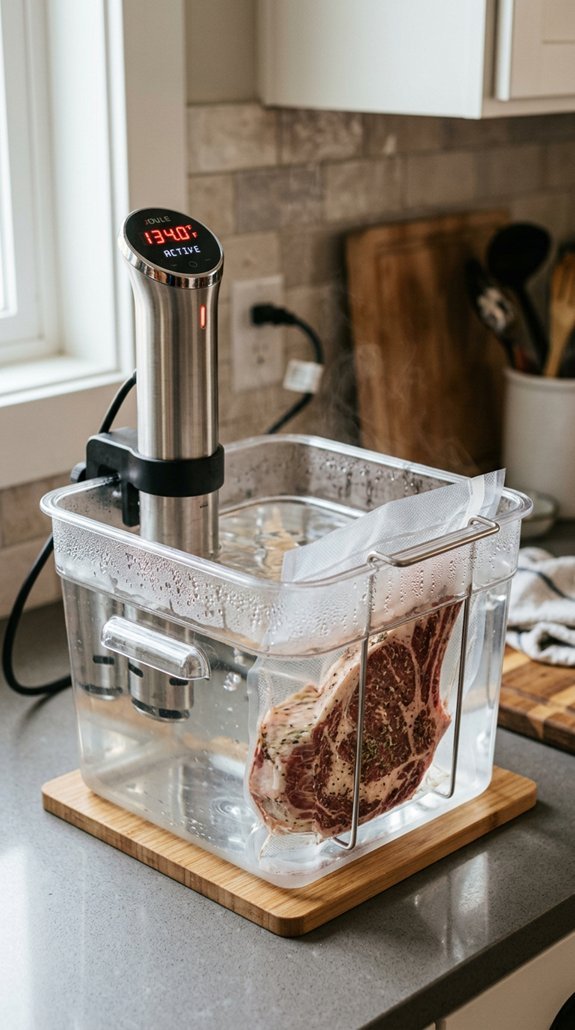
Boiling it down to the basics, you really only need three things to get started with sous vide: a circulator, a container, and a sealed bag. Budget gear works surprisingly well here. A zip-top freezer bag and any large stockpot get the job done.
Here’s what actually matters:
- Immersion circulator for precise temperature control
- A deep container to keep food fully submerged
- Sealed food-safe bags to protect your ingredients
- Racks or clips as safety accessories to prevent floating
- A cast-iron skillet for finishing with a proper sear
Popular sous vide machines like the Joule, Anova, and Instant Pot Slim offer intuitive controls and compact designs that make them easy to store and use. Simple setup, seriously impressive results! If you’re weighing your options, consulting a kitchen appliance buying guide can help you compare features and find the best value for your budget.
Is Sous Vide Safe to Eat?
Sous vide is safe to eat, but only when you nail two things: temperature and time. Pathogen pasteurization isn’t just about heat; it’s about holding that heat long enough. At 130°F, you need roughly 112 minutes. Bump it to 140°F, and 11 minutes does the job.
Post-cook handling matters just as much! Serve your food promptly, or hold it at 130°F or above until it hits the table. If you cooked below 126°F, eat it immediately. Don’t vacuum seal something and assume it’s safe forever. Anaerobic bacteria don’t care about plastic bags.
How Does Sous Vide Compare to Conventional Cooking?
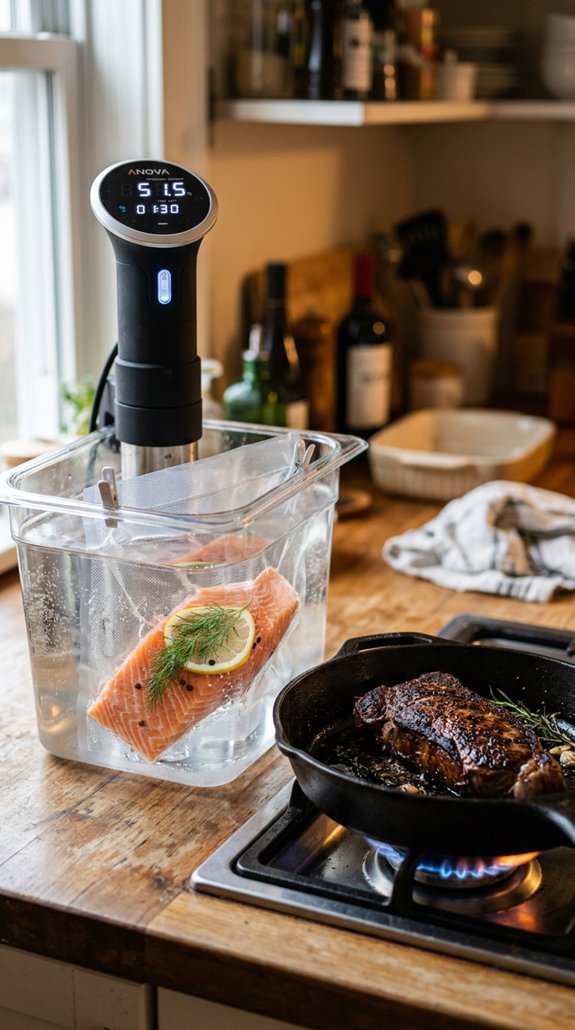
Now that you know sous vide is safe when you handle it right, it’s worth stepping back and asking the bigger question: how does it actually stack up against the way most of us already cook?
The differences are pretty significant:
- Sous vide holds temperature within ±0.1°C, while conventional methods can vary 20–30°C
- You get edge-to-edge doneness with no temperature gradients
- Conventional cooking wins on surface browning through the Maillard reaction
- Sous vide retains roughly 7–19% more yield depending on protein
- Traditional methods deliver faster results, often under 15 minutes
Both approaches have real strengths! Similarly, in home cleaning technology, precision and consistency are equally valued, as seen in how LiDAR laser mapping allows robot vacuums to navigate rooms with far greater accuracy than older random-path models.
Frequently Asked Questions
Can You Sous Vide Frozen Food Without Thawing It First?
Yes, you can sous vide frozen food without thawing it first. Just add 50% more cook time to guarantee frozen safety and proper texture retention while keeping your bag fully submerged throughout.
Does Sous Vide Work Well for Cooking Fish and Seafood?
At 122°F, you’ll achieve perfectly tender texture in fish. Sous vide works exceptionally well for seafood—you’ll master delicate timing easily, cooking a one-inch fillet in just 35 minutes with consistent, edge-to-edge results.
Can You Reuse the Water in Your Sous Vide Bath?
Yes, you can practice water reuse in your sous vide bath! Replace it every 5–15 days, or sooner if it turns cloudy or smells off, ensuring microbial safety throughout your cooks.
How Do You Finish Sous Vide Meat After It Leaves the Bath?
You’ve babied that meat in warm water — don’t ruin it now! Dry it, sear it fast on screaming-hot cast iron for crust development, season it, then use resting techniques before serving immediately.
Can Multiple Different Foods Be Cooked in the Same Bath?
Yes, you can cook multiple foods together, but they must share the same target temperature. Use temperature stacking carefully, seal each item separately to avoid cross-contamination risks, and remove shorter-cooking items promptly.
Conclusion
Sous vide is your kitchen’s secret weapon, turning every meal into a perfectly conducted symphony where nothing gets left behind. You’ve got precise temperature control, sealed-in flavor, and consistent results every single time. And once you understand how time and temperature work together, you’ll wonder how you ever cooked any other way. It’s approachable, it’s reliable, and honestly, it makes you look like a pro without breaking a sweat.