
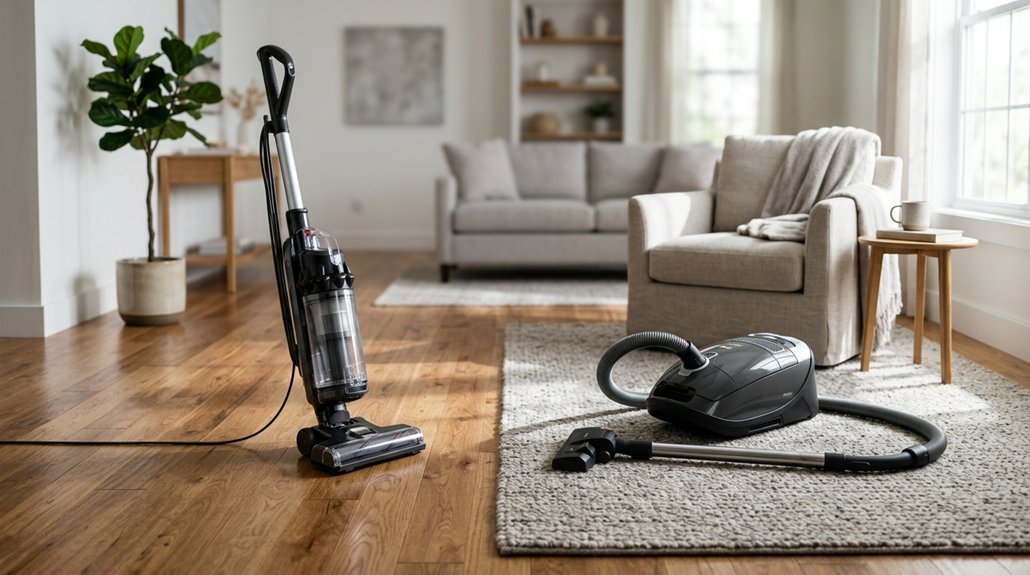
Picking a vacuum shouldn’t feel like defusing a bomb, but for many people, it genuinely does. You’ve got two very different machines competing for your closet space, and the wrong choice means frustrating sessions wrestling with a bulky cleaner that wasn’t built for your floors. Uprights and canisters each have real strengths, and knowing which one matches your home makes all the difference. Keep going, because the answer might surprise you.
Key Takeaways
- Uprights excel on thick carpets, removing 5–10% more embedded debris in single-pass tests than canisters.
- Canisters handle mixed flooring, stairs, and tight spaces better due to their lightweight, flexible hose design.
- Canisters run quieter at 60–65 decibels, while uprights reach 65–75+ decibels during operation.
- For allergy sufferers, sealed canisters with true HEPA filtration offer superior dust containment and multi-stage filtration.
- Uprights cost less upfront and suit simple setups; canisters last longer and offer greater attachment versatility.
Upright vs Canister Vacuum: Key Differences at a Glance
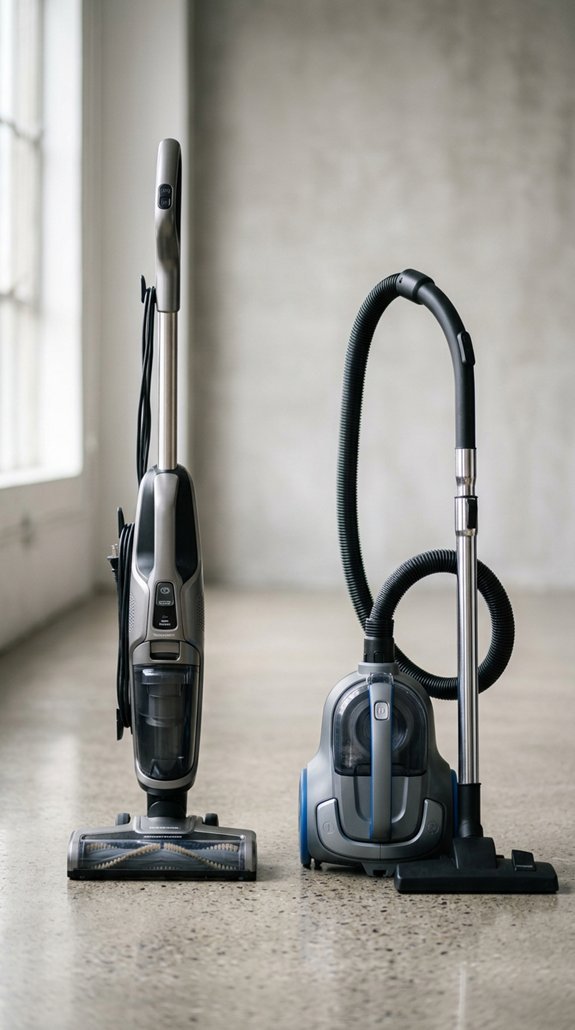
Before choosing between an upright and a canister vacuum, it helps to understand how differently these two machines are actually built.
Uprights combine everything into one vertical body, offering compact storage at roughly 1.1 sq ft. Canisters split the motor and dustbin into a wheeled unit connected by a hose.
The head design differs too: uprights push forward, while canisters pull behind on wheels.
And when it comes to pet hair, versatility, and cord management, each style has real trade-offs worth knowing. Canisters tend to be the better choice for hardwood floor cleaning, thanks to their lighter weight and specialized attachments that reduce the risk of surface damage. In fact, canister models consistently perform well across multiple floor types, making them a popular choice for homes with mixed surfaces. Let’s break down what actually separates them before you decide!
Which Cleans Carpets and Hard Floors Better?
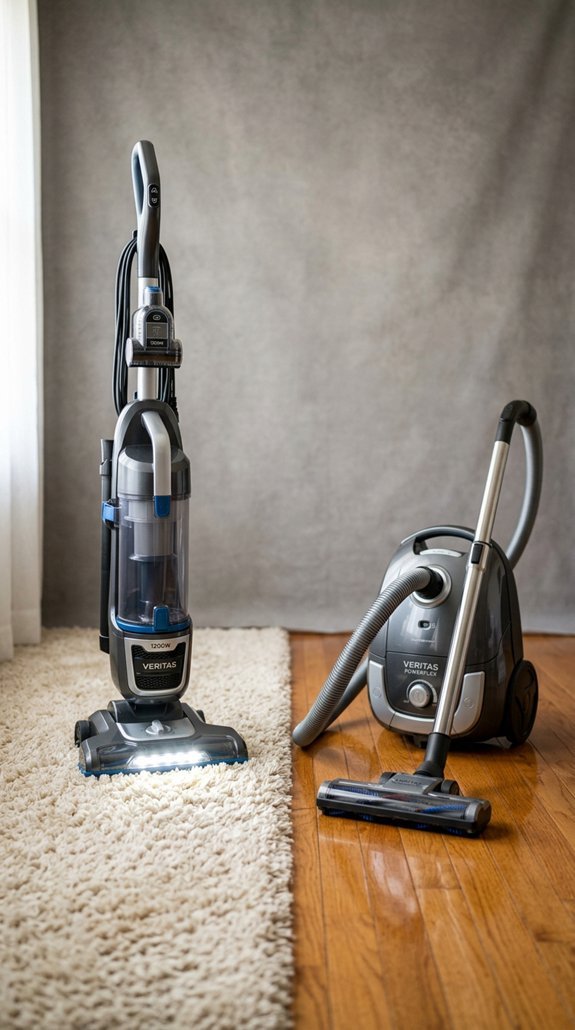
When it comes to cleaning performance, the floor type in your home is really what determines which vacuum wins. Uprights dominate deep‑pile carpet with a concentrated brush roll and a shorter suction path that pulls out embedded debris efficiently. Canisters, with their brushless heads and high airflow, protect your floor finish on hardwood and tile beautifully.
| Floor Type | Better Choice |
|---|---|
| Thick carpet | Upright |
| Hardwood/tile | Canister |
| Mixed flooring | Canister (with powerhead) |
| Low-pile rugs | Either works well |
And honestly? Match the vacuum to your floors, not the other way around! In head-to-head testing, uprights recorded 5–10% more embedded debris removal than canisters in single-pass tests on medium to high-pile carpets. Our upright vacuum roundup compares the top-performing models for everyday floor and carpet cleaning.
How Each Handles Stairs, Furniture, and Tight Spaces
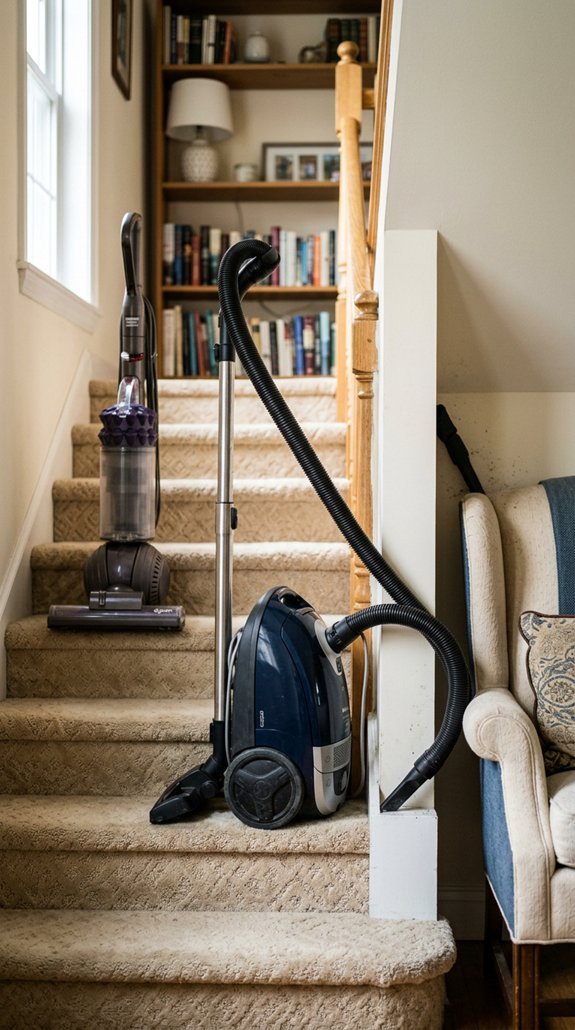
Stairs, furniture, and tight spaces are where these two vacuum types really go their separate ways. Stair safety alone is a compelling reason to choose carefully. Here’s how each performs:
- Stairs: Canisters win here. A lightweight hose and head move freely over each tread while the motor stays on the landing.
- Furniture accessibility: Canister wands slide under low beds and sofas without moving anything.
- Tight corners and precision cleaning: Canister nozzles reach between appliances and along baseboards where upright bodies simply can’t maneuver.
Uprights excel on open floors. But everywhere else? Canisters dominate. Upright vacuums are especially well suited to single-level homes with large, open carpeted areas where covering ground quickly matters most. For garages, workshops, or liquid spills, a wet dry vacuum handles heavier messes that neither upright nor canister models are designed to tackle.
Weight, Noise, and Everyday Ease of Use
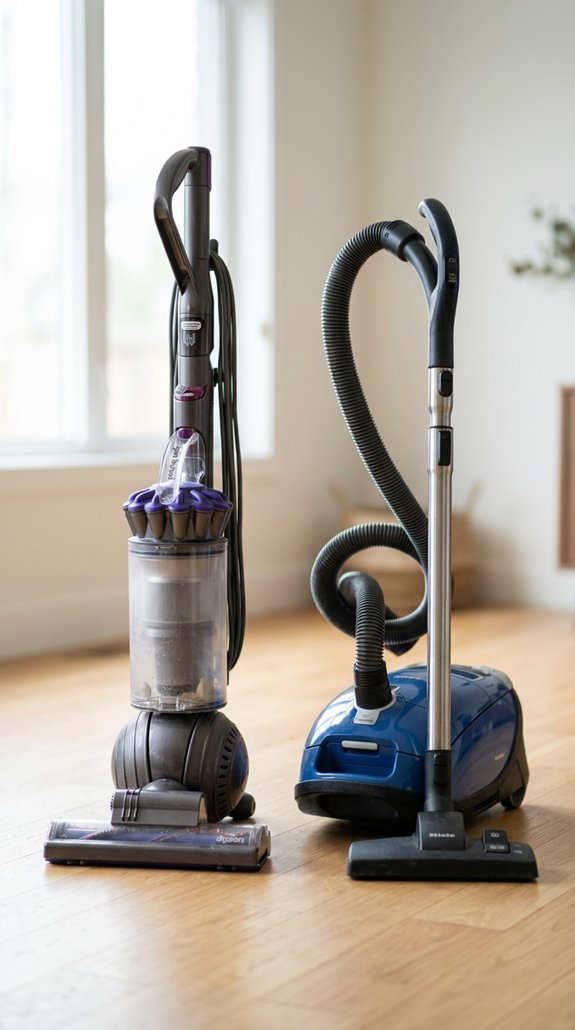
Choosing between an upright and a canister often comes down to how each one actually feels during a typical cleaning session, and that’s where weight, noise, and everyday handling really start to matter.
The vacuum you enjoy using is the one you’ll actually reach for when it’s time to clean.
Uprights run heavier at 14 to 20-plus pounds as one unit. Canisters split that load, improving maneuverability perception since you’re only steering a lightweight wand.
Noise-wise, canisters typically run 60 to 65 decibels versus uprights at 65 to 75-plus.
And if maintenance frequency is high in your home, uprights offer simpler grab-and-go setup. Canisters reward you with quieter, lighter handling but require managing more components. Canister models also tend to feature a retractable cord stored internally, which reduces the trip-and-fall risk that comes with an upright’s cord lying across the floor during use.
Which Is Better for Allergies and Filtration?
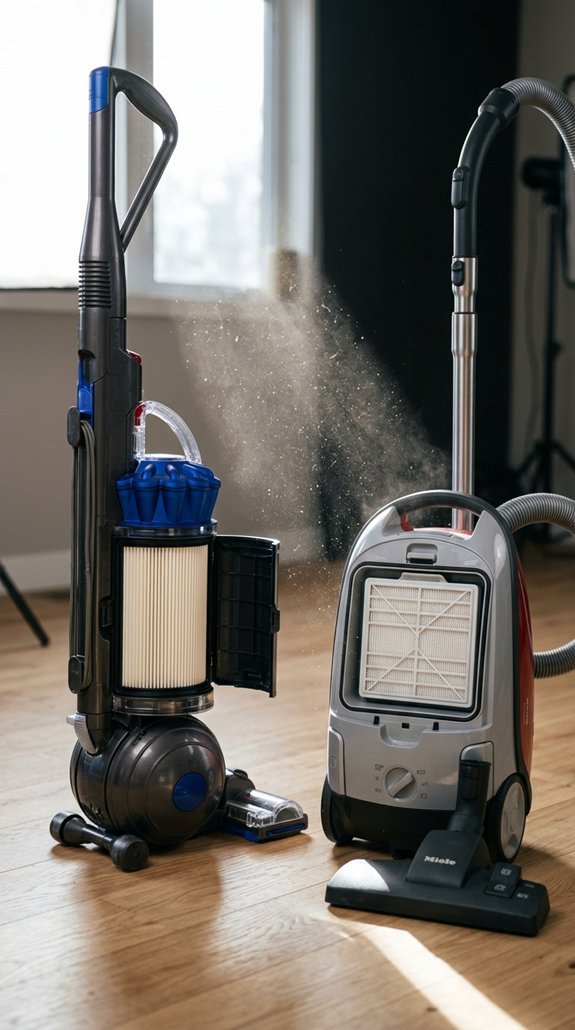
Comfort and noise levels matter, but if allergies or asthma are part of your household picture, filtration performance becomes the real deciding factor. True HEPA captures 99.97% of particles down to 0.3 microns, covering pollen, pet dander, and mold spores completely.
Three things that actually protect you:
- A fully sealed air path, because leaks bypass the filter entirely
- Sealed canisters, which excel at multi-stage filtration and controlled dust disposal
- Bagged uprights, which contain allergens safely during emptying
And honestly? Bagless cups release dust clouds that undo your hard work. Choose bagged whenever possible!
Vacuuming alone is not a complete solution; combining it with allergen-proof encasements on your mattress and pillows significantly reduces overall allergen exposure in the bedroom.
Attachments: Which Type Covers More Cleaning Jobs?
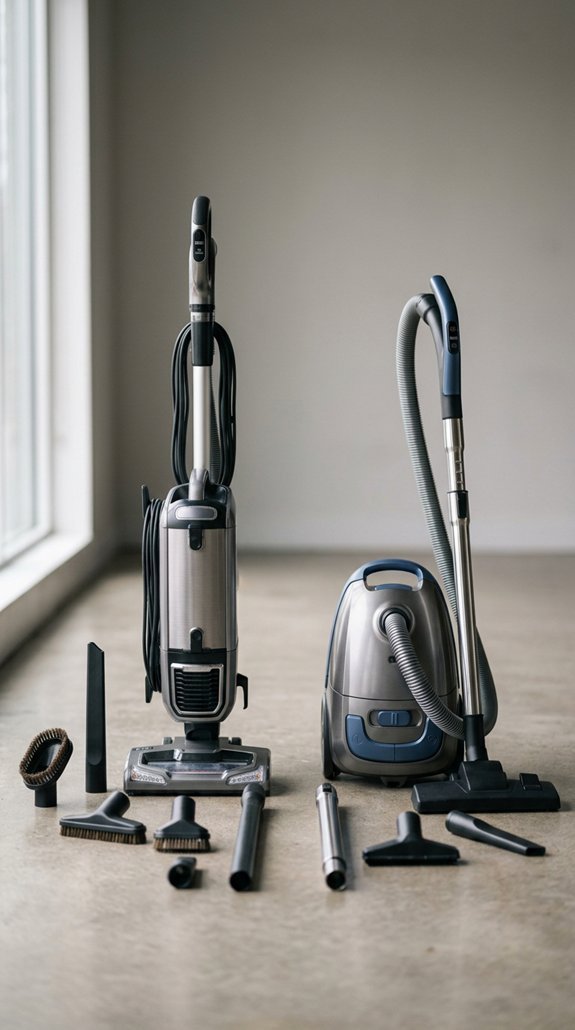
Attachments are where canister vacuums really pull ahead, and it comes down to one core design difference: the hose is built in from the start, not added as an afterthought. That means you’re reaching under beds, cleaning stairs, and tackling upholstery without awkward workarounds.
| Cleaning Job | Canister | Upright |
|---|---|---|
| Stairs | Easy, hose-led | Possible, less convenient |
| Upholstery | Excellent control | Varies by model |
| Ceiling fans | Wand-ready | Often limited |
Attachment longevity matters too. And tool storage is easier when your vacuum is designed around accessories from day one!
Upright vs Canister Vacuum: Cost and Long-Term Value
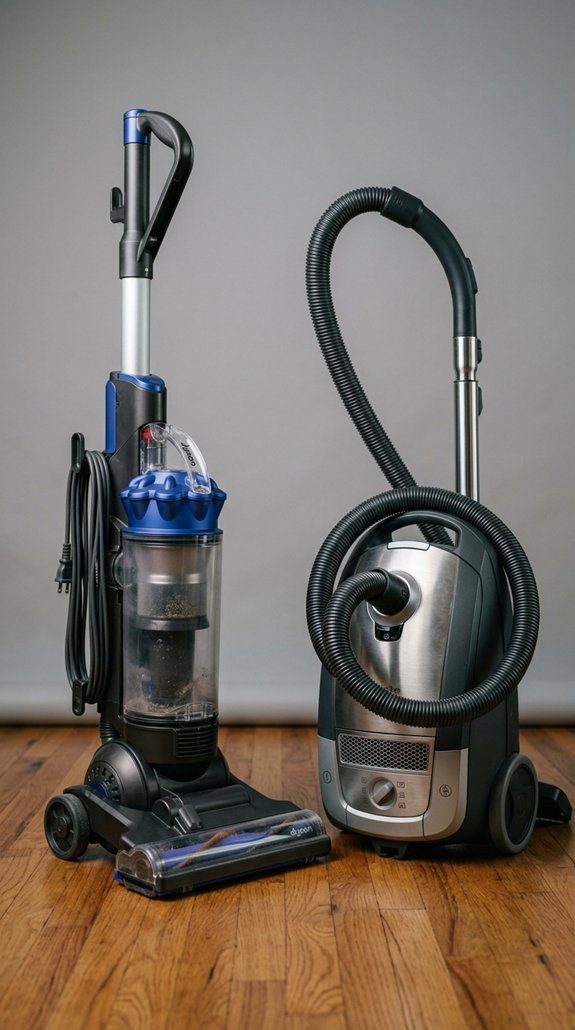
That impressive attachment flexibility comes at a price, though, and it’s worth knowing what you’re actually signing up for over the long haul. Lifecycle budgeting matters here because upfront costs tell only part of the story.
Attachment flexibility has a price — and lifecycle budgeting reveals what upfront costs alone never will.
- Uprights typically run $100–$500, lasting 8–12 years on average.
- Canisters often cost $150–$600, but last 10–15 years, improving your cost-per-year math.
- Consumables add $150–$300 over a decade regardless of type.
And resale value? Premium canisters hold it better. But honestly, either vacuum rewards you most when you maintain it consistently!
Which Type Fits Your Floors, Home Layout, and Lifestyle?
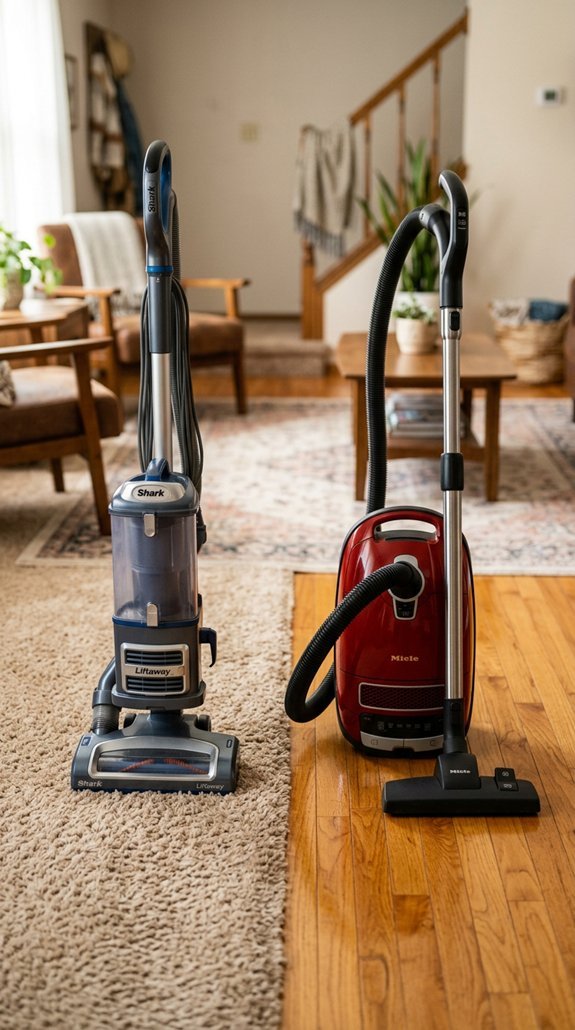
How well a vacuum actually performs in your home depends less on specs and more on the specific combination of floors you have, the layout you’re working around, and how you actually clean.
Got thick carpet throughout? An upright’s motorized brush roll wins. Mostly hardwood? A canister protects those floors beautifully. Multi-story home with stairs? Canisters handle that easily. Tight on storage solutions? Uprights fit neatly in narrow closets. And if pets are part of your household, pet considerations matter too since both types offer specialized tools, but uprights typically deep-clean embedded fur from carpet more aggressively.
Frequently Asked Questions
Can I Use a Canister Vacuum Without Its Motorized Brush Head Attachment?
Yes, you can use a canister vacuum without its motorized brush head. You’ll rely on suction adjustment and hose compatibility with alternative floor tools, though it’s best suited for hard floors, not deep carpets.
How Often Should I Replace the Filters in My Vacuum Cleaner?
Every 3–6 months, you should prioritize filter replacement for standard filters. For your HEPA filters, it’s annually. Sticking to a consistent maintenance schedule prevents suction loss and keeps your vacuum running efficiently longer.
Are Cordless Versions of Upright and Canister Vacuums Widely Available Today?
Yes, you’ll find cordless versions of both widely available today. They offer cordless convenience across major retailers, though you’ll want to weigh battery tradeoffs like shorter runtime and longer recharge times before buying.
Which Vacuum Type Works Best in Homes With Both Pets and Children?
Canister vacuums are your ultimate lifesaver! They’re packed with pet friendly features, tackle hair everywhere, and make kid safe maintenance a breeze—you’ll effortlessly clean under furniture, stairs, and tight spaces while keeping allergens contained.
Do Upright or Canister Vacuums Typically Last Longer With Regular Maintenance?
With regular maintenance, you’ll find canister vacuums typically last longer than uprights. Their superior build quality and modular component longevity mean they often reach 10–15 years, while uprights average around 9–10 years.
Conclusion
There’s a theory that one vacuum type always wins. But the truth? It depends entirely on you. If your home is mostly carpet, an upright delivers the deep-cleaning power you need. Mixed floors, stairs, or allergy concerns? A canister‘s your best bet. You don’t need the perfect vacuum, just the right one for your space. Match the machine to your life, and cleaning actually gets easier!