
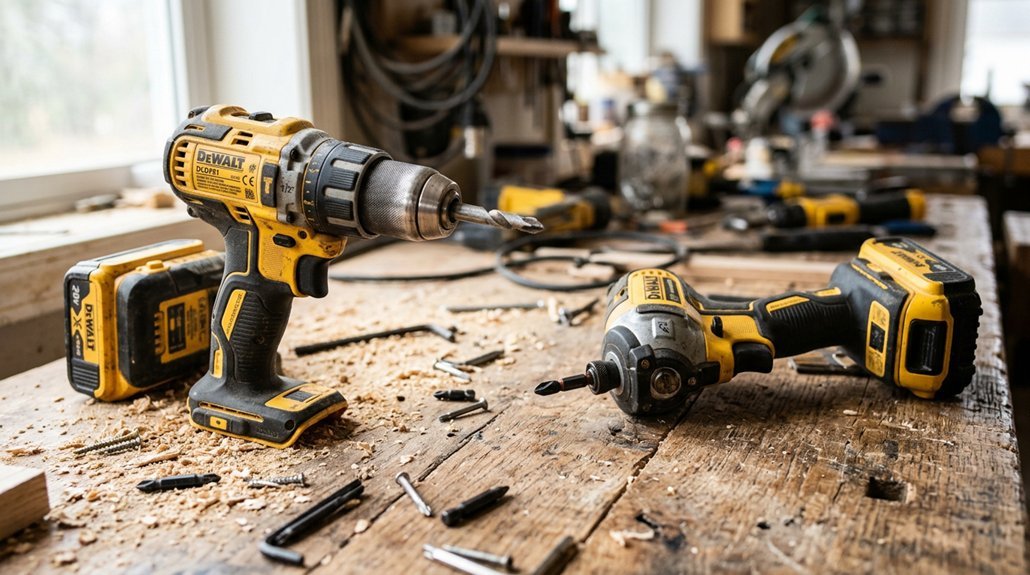
Most people assume a cordless drill can handle everything, but that assumption costs them stripped screws, blown-out wrist joints, and frustration on jobs that should take minutes. These two tools solve completely different problems, and picking the wrong one means working harder than you need to. Here’s exactly what sets them apart, and which one actually belongs in your hand.
Key Takeaways
- A drill delivers smooth, continuous torque with clutch control, making it better for clean drilling and precise screwdriving in delicate materials.
- An impact driver uses rapid hammer strikes to produce high burst torque, excelling at long screws, lag bolts, and dense hardwoods.
- Drills accept a wider range of bit types; impact drivers use a quick-change hex collet with narrower compatibility.
- Impact drivers reduce user fatigue and kickback during repetitive fastening; drills transfer reactive force directly to the user under load.
- Start with a drill for general use; choose an impact driver first if your work mainly involves decking screws or structural fasteners.
What’s the Difference Between a Drill and an Impact Driver?
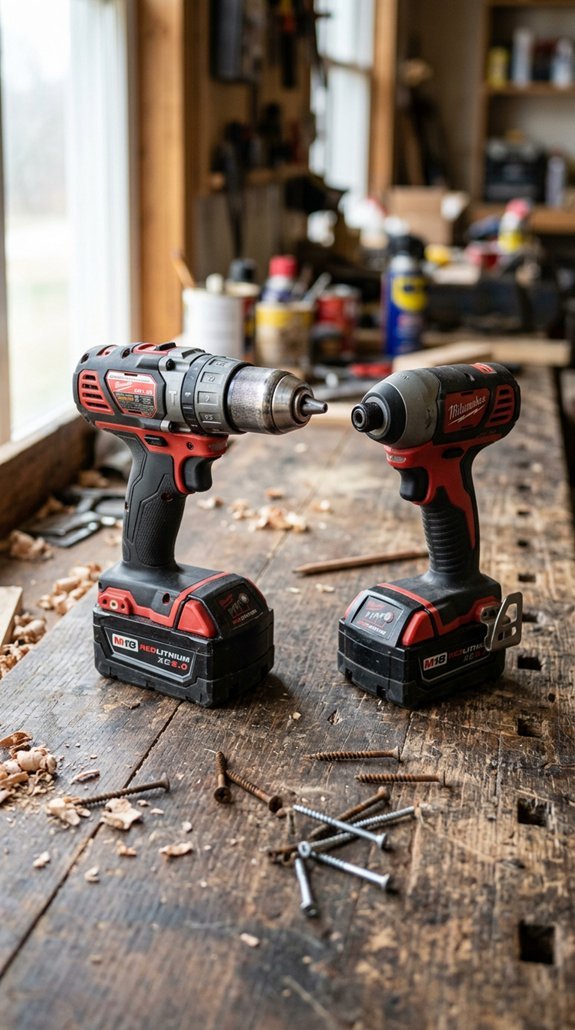
At first glance, a cordless drill and an impact driver look like they’re doing the same job, and honestly, they often end up sitting side by side in the same toolbox.
But they’re built differently for different reasons. A drill uses a rotating chuck for bit retention, accepting a wider range of bit sizes and types. An impact driver uses a quick-change hex collet, so bit swaps are faster but compatibility is narrower. And on noise comparison alone, impact drivers are noticeably louder and more aggressive.
Drills are your general-purpose go-to. Impact drivers are specialists. Both tools are commonly available as cordless power tools, making them easy to move around a job site without being tethered to an outlet. When resistance is encountered, an impact driver’s internal hammering mechanism delivers short, rapid bursts of power to dramatically boost torque output.
How Each Tool Delivers Torque Differently
Both tools spin, but that’s about where the similarity ends.
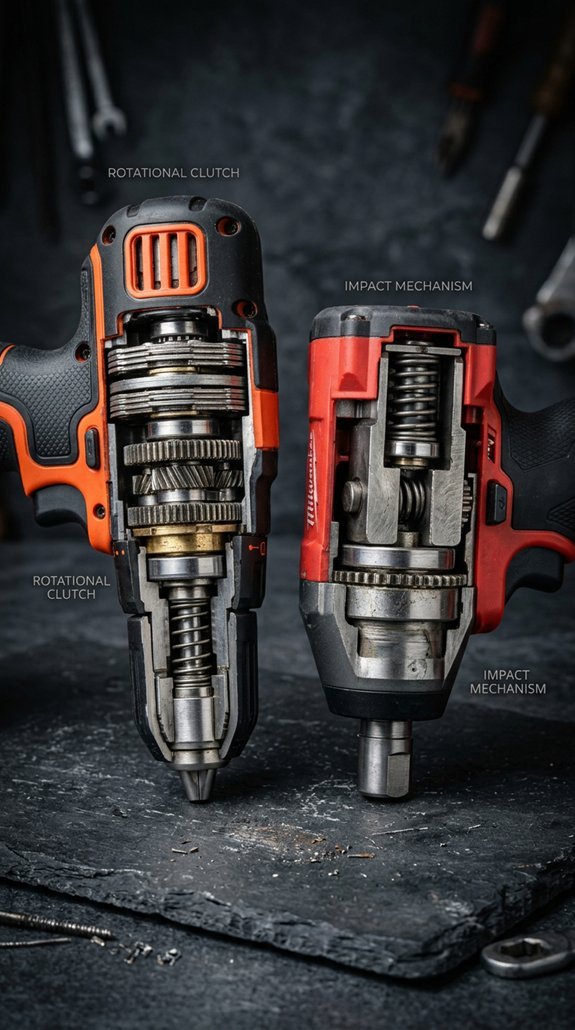
A cordless drill delivers torque smoothly and continuously, like a steady handshake. Its adjustable clutch disengages when resistance hits your preset limit, giving you clean mechanical damping that protects screws from overdriving.
An impact driver works differently. When resistance builds, its internal hammer strikes the anvil in rapid bursts, releasing stored energy through aggressive, pulsed energy transfer. Those bursts hit hard, often reaching 1,200 to 2,000 in-lbs. No slip-clutch needed. The drill offers control; the impact driver offers raw, escalating force exactly when you need it most.
Under sustained load, a drill can transfer reactive force directly to the user’s wrist, while an impact driver’s torque increases automatically, preventing stalling and reducing the physical strain on the operator. For demanding outdoor projects, pairing an impact driver with the right cordless power equipment can significantly cut down on fatigue during extended work sessions.
What a Cordless Drill Does Best
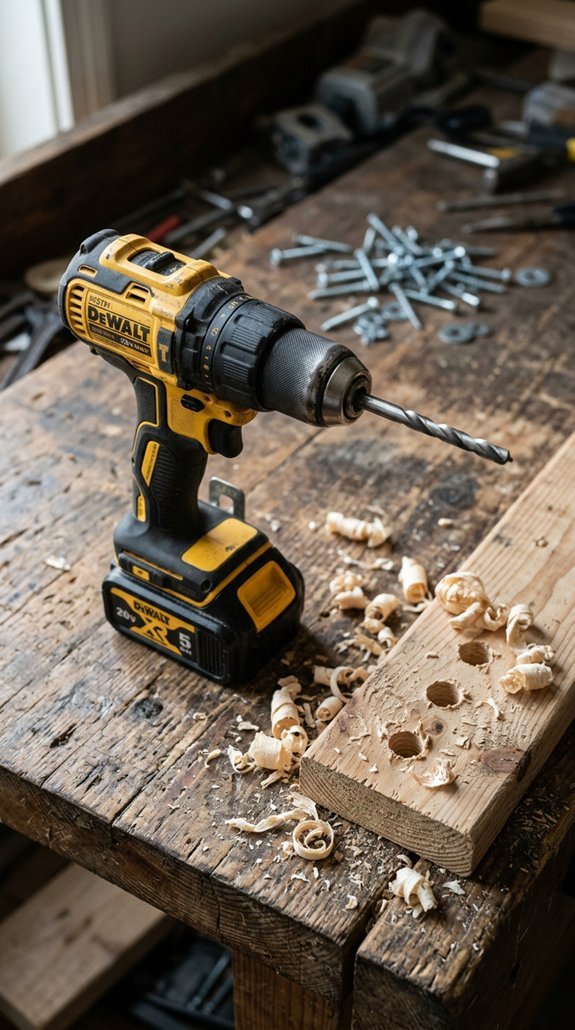
Grab a cordless drill when the job calls for accuracy over brute force. Its variable-speed control and ergonomic design make precision maintenance tasks feel manageable, even in tight spaces.
Here’s where a cordless drill truly shines:
- Drilling clean pilot holes in wood, plastic, and soft metal
- Driving cabinet, deck, and drywall screws without stripping
- Hanging shelves, brackets, and fixtures around the house
- Reaching cabinets, ceiling voids, and awkward corners easily
- Mixing small batches of paint or thinset with a paddle attachment
And that adjustable clutch? It protects your materials every single time!
When tackling household upkeep, pairing your drill with the right floor care equipment can make full-room renovations and cleaning projects far more efficient from start to finish.
For demanding work, brushless motor models deliver longer runtime per charge and run cooler during extended use than their brushed counterparts.
What an Impact Driver Does Best
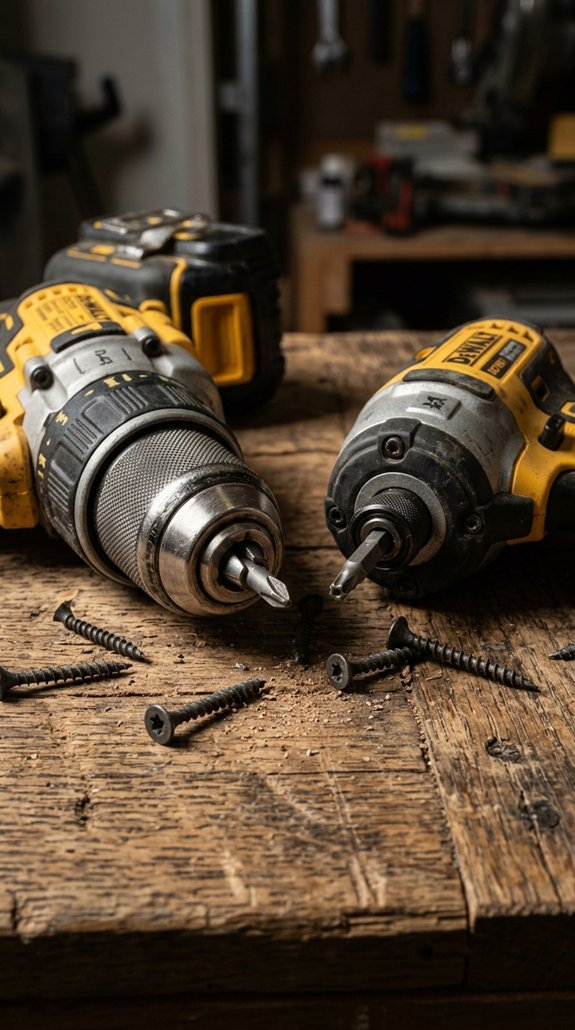
When sheer fastening power is what the job demands, an impact driver is almost always the right tool for the work. It excels at driving long deck screws, lag screws, and structural fasteners into dense hardwoods without stalling or stripping heads.
Deck fastening projects, framing, and repetitive builds go noticeably faster with one in your hand. And when you’re wrestling with stubborn fasteners, rusted bolts, or overtightened screws, the impact action breaks them free quickly. It also handles self-tapping screws into steel studs surprisingly well. Just remember, it’s a fastening specialist, not a drilling tool!
With the right attachment, it can even mix paint faster than a standard drill thanks to its higher torque output. Much like how cordless vacuum batteries may need replacement over time, impact driver batteries benefit from proper charging habits to maintain consistent performance.
Drilling Clean Holes: Why the Drill Wins
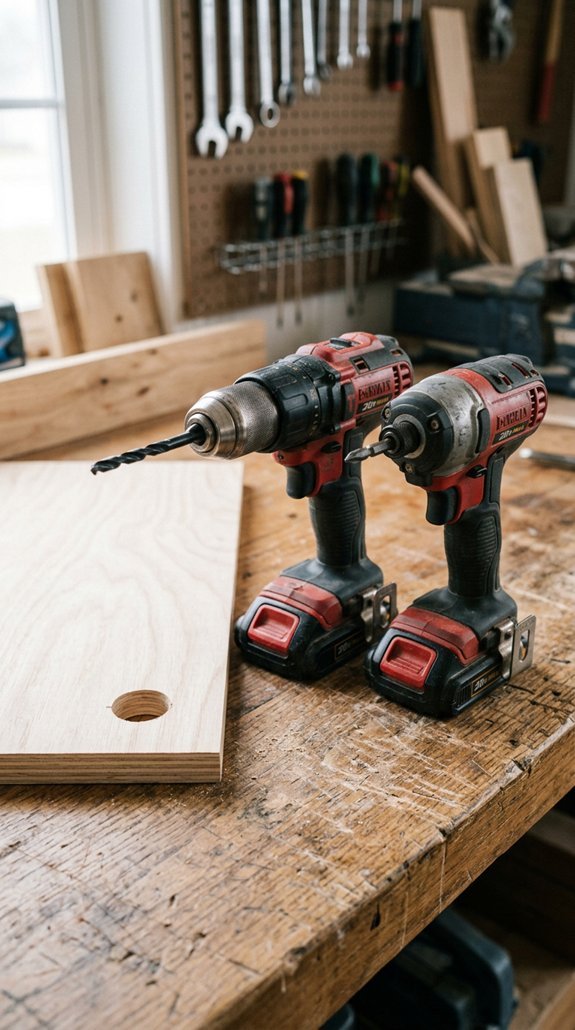
The impact driver is a fastening powerhouse, but put it in charge of drilling a clean, precise hole and it’ll remind you pretty fast that it has limits. For entry finish that actually looks good and bit selection that gives you real options, a standard drill wins every time.
The impact driver is built to drive, not drill — when clean, precise holes matter, reach for a standard drill.
Here’s why the drill handles clean holes better:
- Continuous rotation keeps your bit centered from the start
- A 3-jaw chuck accepts round-shank twist bits, spade bits, and hole saws
- Speed modulation helps prevent tear-out
- Steady rotation protects brittle materials from cracking
- Better control means cleaner, more accurate results
That said, an impact driver can still drill holes when needed, though drill bit selection is the most important factor in determining whether it will actually work. For similar reasons, pairing a drill with the right attachments matters just as much in other tool categories, as seen with cordless vacuums where multi-surface brush heads can make or break performance across different floor types.
Driving Long Screws and Lag Bolts: Impact Driver Territory
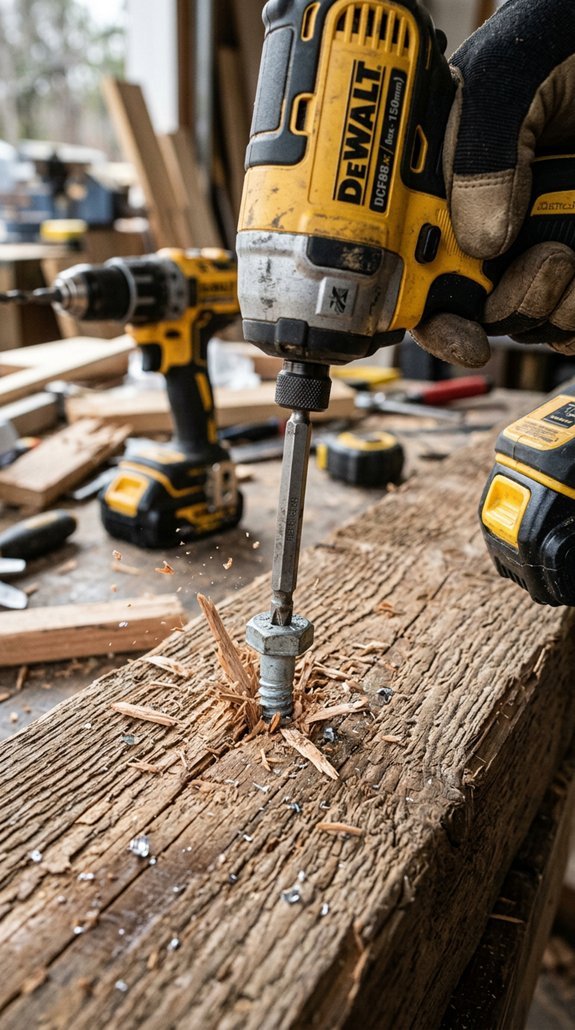
If there’s one task where the impact driver earns its keep without question, it’s driving long screws and lag bolts into tough material.
As screw lengths increase, resistance builds fast, and a standard drill stalls or twists your wrist. The impact driver handles this differently. Its rapid torque bursts rise automatically as resistance increases, reducing wood splitting and preventing stripped heads.
It’s especially capable with lag bolts up to 1/2 inch by 6 inches in structural lumber.
And because it reduces kickback, you’ll stay comfortable driving fasteners overhead or at awkward angles without fighting the tool the whole time.
Clutch Control vs. Raw Torque: Which Matters for Your Work?
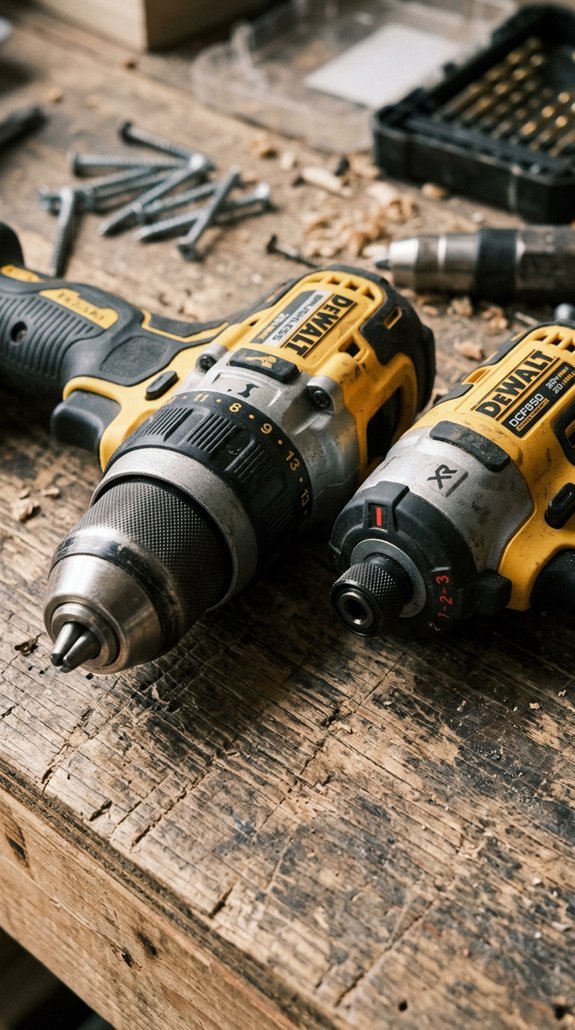
Driving a fastener cleanly comes down to one question: do you need precision control over where it stops, or do you just need the force to get it there?
For precision fastening, a drill’s adjustable clutch wins every time. But for raw material compatibility with dense hardwoods or heavy bolts, you’ll want maximum torque.
- Low clutch settings protect drywall and thin stock
- Medium settings handle softwoods and general tasks
- High settings push through hardwoods and tough materials
- Drill mode bypasses the clutch entirely for maximum force
- Impact drivers excel at burst torque, not precise seating depth
Drill vs. Impact Driver: Pros and Cons Compared
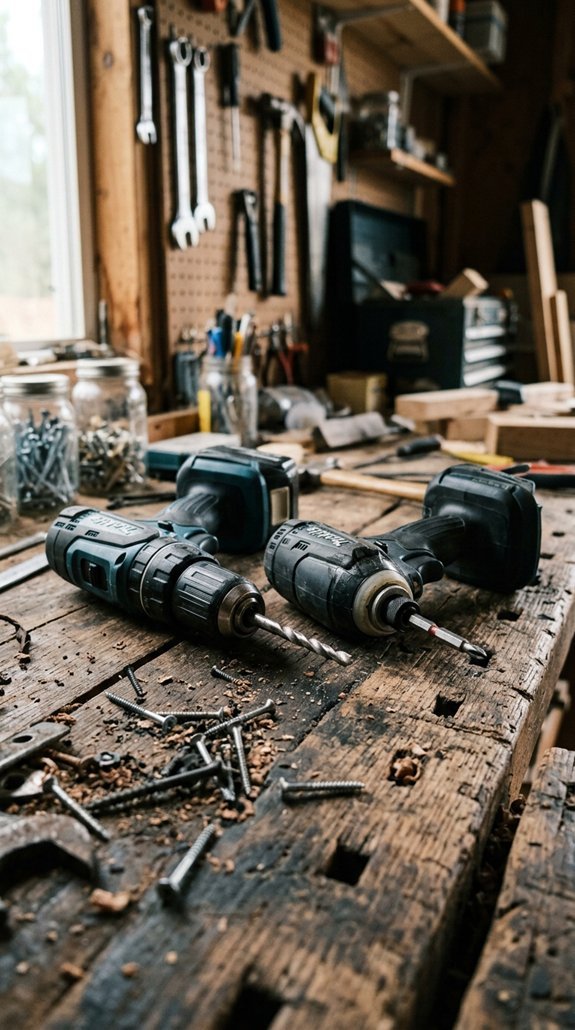
Both tools bring real strengths to the table, but they’re built around different priorities, and knowing those tradeoffs makes choosing between them a lot easier.
Drills win on bit compatibility, clutch control, and quieter operation. They’re ideal for precision work, delicate materials, and drilling clean holes.
Impact drivers dominate repetitive fastening, long screws, and stubborn bolts. They’re compact, reduce wrist strain, and hit harder when it counts.
But battery endurance matters too. Impact drivers often run more efficiently during heavy fastening, stretching your charge further.
Neither tool is universally better. Your work decides which one actually belongs in your hand.
Do You Need Both a Drill and an Impact Driver?
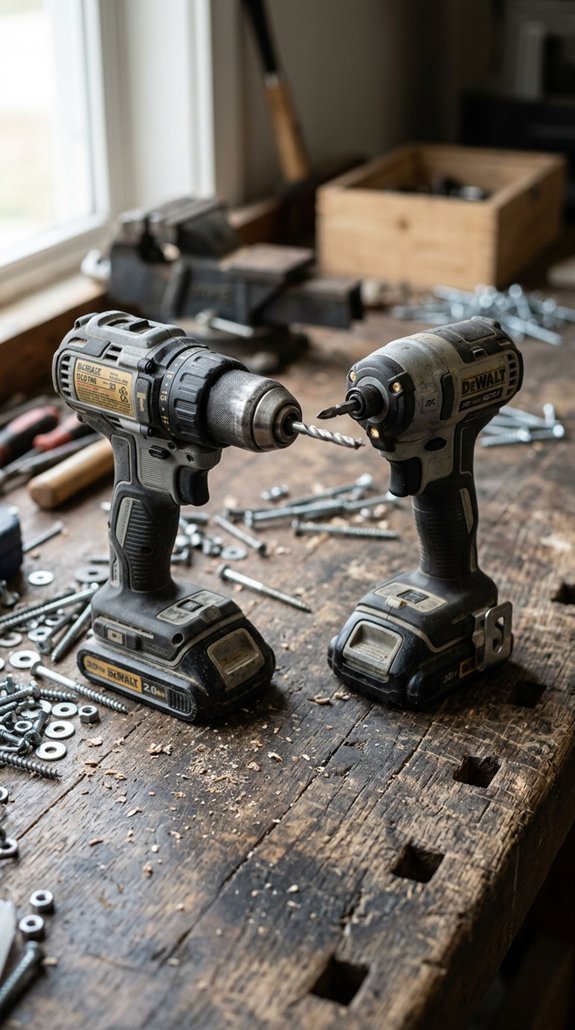
Knowing each tool’s strengths is one thing, but figuring out whether you actually need both sitting in your toolbox is a different question entirely. For light, occasional tasks, one drill handles most jobs fine. But once your projects grow, battery compatibility across a matched kit makes owning both genuinely practical, and good tool ergonomics mean less fatigue during long sessions.
- A drill covers drilling holes and delicate fastening
- An impact driver dominates long screws and dense hardwoods
- Both tools split duties cleanly without overlap
- Combo kits often offer the best value
- Serious DIY work almost always justifies two tools
Which Should You Buy First: Drill or Impact Driver?
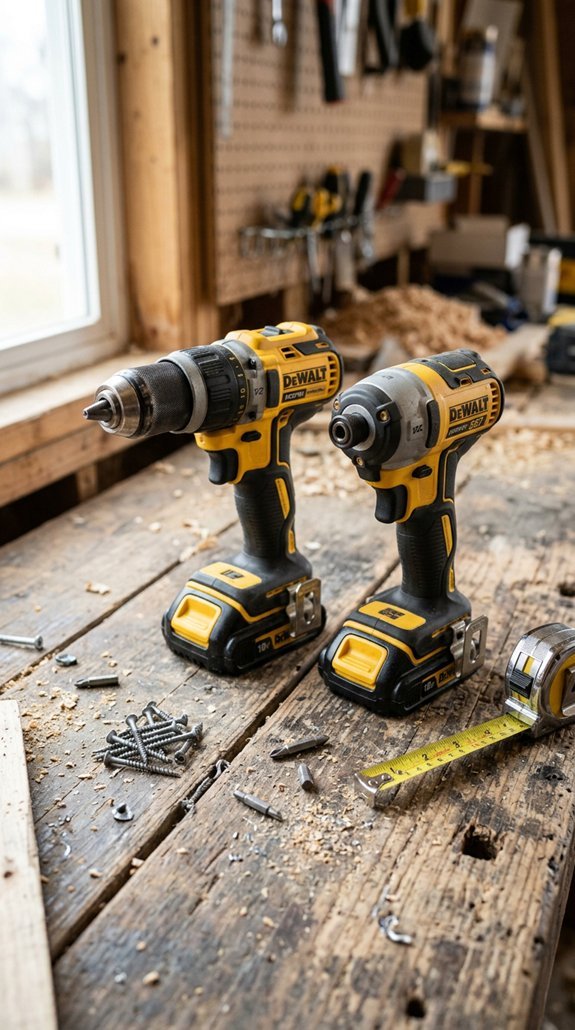
When it comes to picking your first tool, the answer for most people is straightforward: start with the drill. It handles drilling holes, careful screwdriving, and furniture assembly better than an impact driver can. Its clutch protects delicate materials from stripped screws. And with a good ergonomic grip, you’ll stay comfortable through long sessions.
But if your first big project involves decking screws or lag bolts, grab the impact driver instead. Also, consider battery lifespan when choosing your platform, since committing to a brand early saves money later. Most guides agree: drill first, impact driver second.
Frequently Asked Questions
Can an Impact Driver Be Used to Drill Holes in Wood?
Yes, you can use an impact driver to drill holes in wood, but you’ll sacrifice hole accuracy. Use a hex-shank bit driver, focus on quick piloting, and accept reduced clamping control versus a standard drill.
What Battery Platform Works With Both Drills and Impact Drivers?
Your drill and your impact driver both run on the same 18V/20V Max battery platforms. Staying within one brand’s tool ecosystems means you’ll share batteries, cut costs, and simplify your setup.
Are Impact Drivers Safe to Use on Soft or Delicate Materials?
Impact drivers aren’t ideal for soft materials or precision torque work. You can use them safely by starting at the lowest setting, pre-drilling holes, and stopping before the screw head overdrives the surface.
How Long Does a Cordless Drill or Impact Driver Battery Typically Last?
With 300–1,000 charge cycles, your battery lifespan typically spans 3–5 years. Runtime estimates range from 30 minutes to 3+ hours, depending on your battery’s amp-hour rating and how hard you’re pushing the tool.
Can an Impact Driver Damage Screws or Strip Fastener Heads?
Yes, an impact driver can strip fastener heads if you’re not careful. Without proper torque control, the aggressive bursts overwhelm small screws. Bit tipping from poor alignment makes cam-out worse, so use short trigger pulls.
Conclusion
It’s funny how often you end up at the hardware store for “just one tool” and walk out realizing you actually need two. If you’re starting out, grab a cordless drill first. But once you’re knee-deep in a decking project with 500 screws staring back at you, you’ll understand exactly why an impact driver exists. The right tool doesn’t just make the job easier, it makes you wonder how you managed without it!