
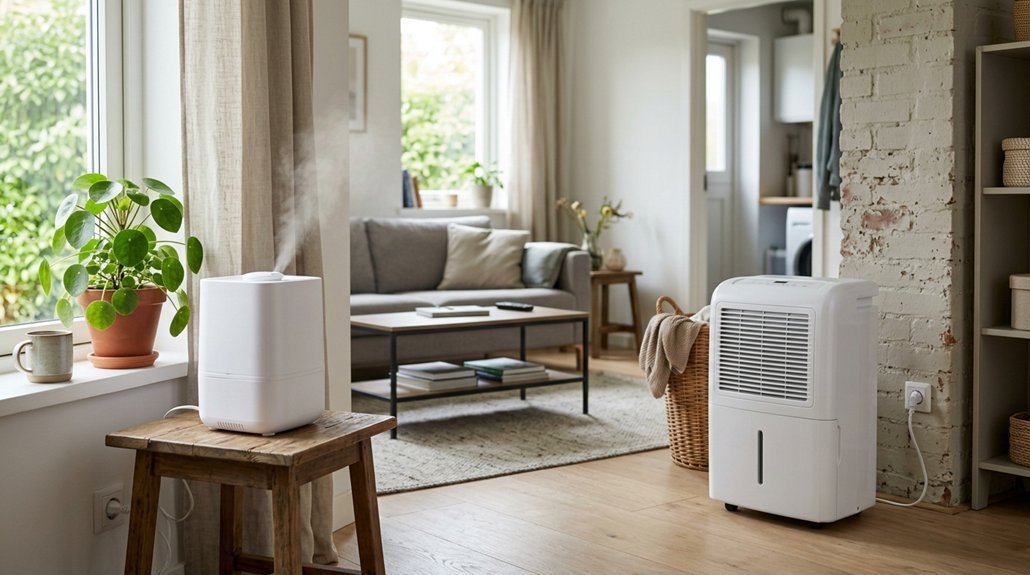
A stuffy, clammy, or oddly dry home doesn’t require guesswork to fix. Checking relative humidity, or RH, with a basic hygrometer is a useful first step. A range of about 30% to 50% is generally considered comfortable: below that, a humidifier can ease dry skin and static; above it, a dehumidifier can help curb condensation and mold-friendly moisture.
Symptoms can overlap, though, so RH alone doesn’t always point to the right answer. The next few clues make the difference clearer.
Key Takeaways
Start by checking your indoor humidity level, since most homes feel most comfortable when relative humidity stays between 30% and 50%.
A humidifier is generally a better fit when humidity drops below 30% or when you notice dry skin, nosebleeds, static shocks, or irritated sinuses. These symptoms often point to air that’s too dry, particularly in winter months when heating systems run frequently.
A dehumidifier is typically the better choice when humidity climbs above 50% or when you see window condensation, notice musty odors, or find mildew forming in the home. Persistent dampness after a flood or leak is another clear sign that excess moisture needs to be addressed.
Bathroom, kitchen, and laundry exhaust fans can help manage moisture from routine activities like showering, cooking, and drying clothes. Running these fans during and after these tasks reduces the humidity load your humidifier or dehumidifier has to handle.
When comparing specific models, match the unit’s coverage area and capacity to the size of the room you’re treating. Regular tank cleaning is also worth factoring into your decision, since standing water in either type of device can allow microbial growth if maintenance is neglected.
If you’re trying to decide between specific models, our humidifier and dehumidifier comparison guides break down capacity, noise levels, and maintenance requirements side by side.
Humidifier vs Dehumidifier: Which Do You Need?
The simplest way to choose is to check your indoor relative humidity with a hygrometer, a small meter that measures how much moisture is in the air.
If humidity levels stay below 30%, a humidifier is the better fit. Adding moisture back into the air can help ease dry skin, nosebleeds, static shocks, and wood that looks dried out or cracked.
If indoor humidity stays above 50%, a dehumidifier is the more suitable choice. It removes excess water from the air, which can reduce window condensation, musty odors, dust mites, and mold growth.
Many households end up using a humidifier during cold, dry winters and a dehumidifier during humid summer months, since indoor conditions often shift with the seasons.
Regular maintenance matters for both appliances. Humidifier tanks should be cleaned on a routine basis to limit mineral buildup and bacterial growth, while a dehumidifier’s tank needs to be emptied regularly or connected to a drain hose for continuous operation. Larger dehumidifiers built for whole-home use can pull as much as 80 pints/day, so matching capacity to your square footage is just as important as choosing the right appliance type.
If you’re trying to decide between specific models, our humidifier and dehumidifier buying guides compare capacity, tank size, and maintenance requirements to help match a unit to your space.
Check Your Home’s Humidity Level
A hygrometer, or a smart thermostat with humidity tracking, can show your home’s relative humidity, meaning the percentage of moisture in the air. Readings are more reliable when taken in several rooms, both morning and evening, since showers, cooking, seasons, and a room’s location can all shift the results.
- Write down the relative humidity reading for each room you check.
- Dry skin, static shocks, nosebleeds, or cracking wood often point to air that’s too dry. A humidifier is typically the solution in this case.
- Condensation on windows, musty odors, or visible mold suggest excess moisture. A dehumidifier is generally better suited to this problem.
- After a leak or flooding, it’s worth rechecking damp areas regularly until humidity levels return to normal.
Winter air tends to run dry, while summer humidity can leave rooms feeling damp and heavy. Rather than guessing, a hygrometer reading gives a clearer picture of what your home actually needs. Just as sizing an air purifier depends on a room’s square footage, choosing the right humidifier or dehumidifier capacity should also factor in the dimensions of the space you’re treating.
If you’re trying to decide between a humidifier and a dehumidifier for your space, our buying guides compare common models by capacity, room size, and features to help narrow down the options.
The Ideal Indoor Humidity Range
For most homes, indoor relative humidity (RH) between 30% and 50% supports comfort and helps protect furniture, flooring, and other belongings from moisture-related damage.
A hygrometer or a smart thermostat with humidity tracking can help you monitor RH levels over time. If readings drop below 30%, a humidifier can add moisture back into the air. If levels stay above 50%, a dehumidifier can help bring them down.
Keeping RH in this middle range also helps limit conditions that allow mold and dust mites to thrive, since both increase in damp air. The EPA recommends keeping indoor RH below 60% to reduce the risk of mold growth.
Humidity needs often shift with the seasons, so a home that runs dry in winter may run humid in summer. Because of this, some households use a humidifier part of the year and a dehumidifier the rest, rather than relying on a single device year-round. Many humidifiers include a built-in humidistat that helps maintain humidity within this target range automatically. If you’re comparing options for either type of unit, our humidifier and dehumidifier buying guides break down capacity, coverage area, and maintenance differences to help match a model to your home’s needs.
Signs You Need a Humidifier or Dehumidifier
Once you know your home’s target range is 30% to 50% relative humidity, a hygrometer can tell you whether the air is actually too dry, too damp, or right where it should be. A few signs typically point to one device or the other.
Signs you may need a humidifier****
Relative humidity readings below 30% often coincide with dry skin, chapped lips, static shocks, and nosebleeds. A humidifier is generally the better fit in this range, since it adds moisture back into the air rather than removing it.
Cracking or warping wood floors and furniture can also indicate air that’s too dry. Wood tends to shrink and crack when humidity drops for extended periods, so this is worth monitoring alongside your hygrometer readings.
Signs you may need a dehumidifier
Readings above 50% relative humidity, along with condensation on windows, musty odors, or visible mildew, suggest excess moisture in the home. A dehumidifier is designed to pull that moisture out of the air and is better suited to this situation than a humidifier.
Water damage from leaks or flooding calls for prompt action. Running a dehumidifier soon after the water is removed can help limit conditions that allow mold to develop.
When neither device is necessary
If your indoor relative humidity consistently falls within the 30% to 50% range and you’re not noticing any of the symptoms above, you likely don’t need a humidifier or dehumidifier. Monitoring with a hygrometer periodically is usually enough to confirm conditions stay stable. Much like air purifiers designed for bedrooms and nurseries, many humidifiers and dehumidifiers now offer a sleep mode that keeps noise levels low enough for overnight use without disrupting rest.
If your readings do point toward one issue or the other, our humidifier and dehumidifier buying guides compare models by capacity, room size coverage, and maintenance requirements to help narrow down options based on your specific situation.
Choose Ventilation, a Humidifier, or Dehumidifier
A hygrometer takes the guesswork out of this decision. Once you know your actual indoor relative humidity, the choice between ventilation, a humidifier, or a dehumidifier becomes straightforward rather than a matter of trial and error.
Check relative humidity in bedrooms, bathrooms, and any corners that tend to feel damp or stuffy. These readings will point you toward the right fix instead of leaving you to guess based on how a room feels.
Ventilation for everyday moisture
Exhaust ventilation is usually the simplest and lowest-cost option for routine moisture control. Running kitchen, bath, and laundry fans during and after moisture-producing tasks, such as cooking, showering, or drying clothes, helps prevent humidity from building up in the first place.
When to add a humidifier****
If your hygrometer shows relative humidity dropping below about 30%, a humidifier can help. This is most common in winter, when signs like dry skin, static electricity, or cracking wood trim suggest the air is too dry. A room-sized humidifier is generally a better fit for a single bedroom or living area than a whole-house system, though sizing should match the square footage of the space you’re treating.
When to add a dehumidifier****
If relative humidity stays above 50%, a dehumidifier is the more appropriate tool. Watch for windows that sweat, doors that stick, or musty smells that linger, since these are common signs of excess moisture. As with humidifiers, dehumidifiers are sized for specific room or basement square footage, so matching capacity to the space matters for effective results.
Maintenance matters either way
Both humidifiers and dehumidifiers need regular cleaning and thorough drying between uses. A neglected unit can become a source of mold or bacteria growth rather than a solution to moisture problems, so factor cleaning frequency and ease into your buying decision. If excess moisture isn’t your only concern, pairing a dehumidifier with an air purifier can help address both humidity and airborne particles at once.
If you’re comparing specific models, our humidifier and dehumidifier buying guides break down capacity, tank size, and noise levels by room size to help narrow the options based on the specifications that matter for your space.
Frequently Asked Questions
How Do I Know if I Need a Humidifier or a Dehumidifier?
The easiest way to tell is to measure your indoor humidity with a hygrometer, an inexpensive tool available at most hardware stores. If the reading falls below 30%, a humidifier can help, especially if you’re noticing dry skin, irritated sinuses, or static electricity around your home. If the reading is above 50%, a dehumidifier is likely the better choice, particularly if you’re dealing with condensation on windows, musty odors, visible mold, or rooms that consistently feel damp. Humidity between 30% and 50% is generally considered comfortable for most homes, so you may not need either device in that range. Keep in mind that humidity levels can vary by room and season, so it’s worth checking multiple areas of your home before deciding.
What Are the Downsides of Using a Dehumidifier?
The main downsides are higher electricity use, the need to empty water tanks regularly, and operating noise. Setting the humidity level too low can over-dry your home, leading to dry skin, static, or discomfort. Dehumidifiers also take up space and require a nearby outlet, which can limit placement options in smaller rooms. If filters or coils aren’t cleaned as recommended, efficiency can drop and mold may develop inside the unit. Some models are also less effective in very cold spaces, since low temperatures can affect performance. Weighing these factors against the benefits of reduced humidity can help you decide if a dehumidifier is worth using in your home.
Is It Better to Sleep With a Humidifier or a Dehumidifier?
Neither is inherently better; the right choice depends on your bedroom’s humidity level. Ideally, indoor humidity should stay between 30 and 50 percent for comfortable, healthy sleep. If the air in your room is too dry, which is common in winter or in heated homes, a humidifier can add moisture and ease symptoms like dry skin, irritated sinuses, or a scratchy throat. If your room feels damp, stuffy, or prone to mold and mildew, a dehumidifier can help by pulling excess moisture out of the air, which may also reduce allergy triggers. To determine which device you actually need, use a hygrometer to measure your room’s humidity before deciding, since guessing can lead to using the wrong appliance for your environment.
Do I Need a Humidifier or Dehumidifier for a Stuffy Nose?
It depends on what’s causing your stuffy nose. If your home’s air is dry, typically below 30% humidity, a humidifier can help by adding moisture that soothes irritated nasal passages and thins mucus. This is common in winter or in heated indoor spaces.
However, if your congestion is triggered by mold, dust mites, or other allergens, a dehumidifier may work better. These allergens thrive in humid conditions above 50%, so reducing moisture in the air can lessen your symptoms.
The best way to know which one you need is to measure your home’s humidity level with a hygrometer. If it’s too low, try a humidifier. If it’s too high, a dehumidifier is likely the better choice. Pay attention to when your symptoms worsen to help pinpoint the cause.