
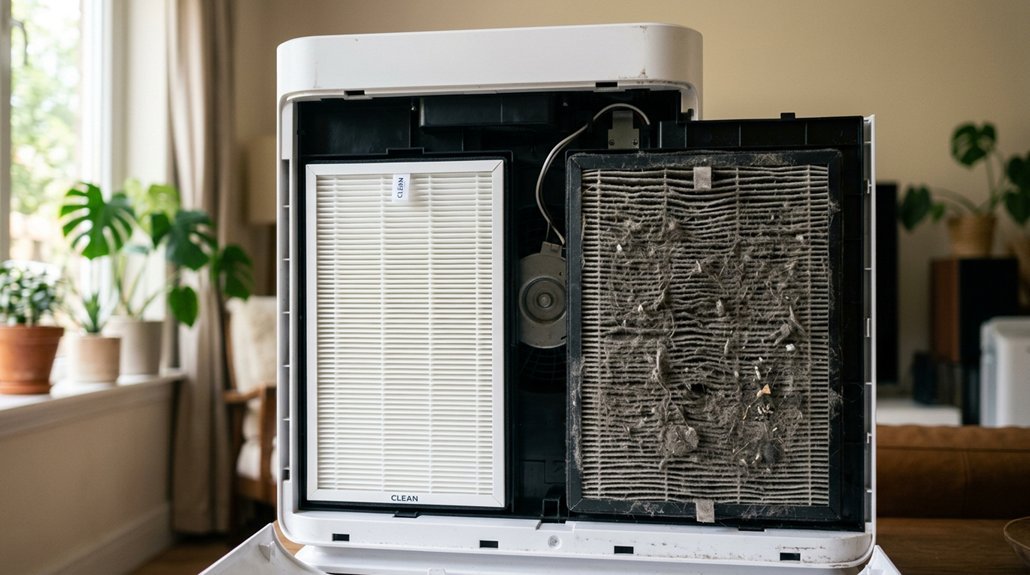
An air purifier that’s running but not noticeably improving air quality often points to a filter that needs attention. Reduced airflow, lingering odors, or dust settling faster than usual are common signs a filter is losing effectiveness.
There’s no single answer for how often to replace an air purifier filter. The right timeline depends on the type of filter installed, how many hours a day the unit runs, and the amount of dust, pet hair, smoke, or other particles present in the home.
The sections below break down typical replacement intervals by filter type and the factors that can shorten or extend that timeline.
Key Takeaways
How Often Should You Replace an Air Purifier Filter?
Manufacturer information typically shows HEPA filters lasting 6 to 12 months, while activated carbon filters generally need replacement every 3 to 6 months. These ranges vary by brand and model, so it’s worth checking the specific guidelines for your unit.
Households with pets, allergy sufferers, or those dealing with pollen, smoke, or heavy pollution often see shorter filter life, sometimes as little as 3 to 6 months. Homes with multiple pets or smokers may find filters wear out even faster than the manufacturer’s stated range.
A few signs point to a filter that needs attention. Weaker airflow, louder fan noise, or odors that persist even with the purifier running are common indicators. Checking the filter directly can also help: visible grime, discoloration, or trapped hair on the surface suggests reduced capture effectiveness, even if the unit still seems to be running normally.
Delaying replacement isn’t just a minor inconvenience. Manufacturer specifications suggest that an overdue filter can lower the unit’s Clean Air Delivery Rate (CADR), place extra strain on the motor, and potentially worsen allergy or asthma symptoms for sensitive users. Setting a reminder based on your household’s specific conditions is generally a more reliable approach than relying on a fixed calendar schedule.
If you’re comparing air purifiers with different filter types and replacement costs, our [buying guide] breaks down the long-term maintenance considerations across popular models.
How Often Should You Replace Your Air Purifier Filter?
There’s no single fixed schedule here, since filter lifespan depends on the type of filter and what your home environment puts it through. Manufacturer information generally shows HEPA filters lasting 6 to 12 months, though homes with pets, allergy sufferers, or heavy outdoor pollution may need replacements closer to the shorter end of that range.
Activated carbon filters tend to wear out faster, typically needing replacement every 3 to 6 months. This is especially true in homes where cooking odors, cigarette smoke, or wildfire smoke are regular factors, since carbon filters absorb odors and gases rather than trapping particles.
Pre-filters are the simplest to maintain. Vacuuming or rinsing them every 1 to 3 months is usually enough, and replacement is only necessary once they’re torn or heavily clogged with debris. Some manufacturers, like AromaRoom, recommend easy filter replacement every 3 to 6 months for their H13 HEPA models with smoke removers.
Since exact timelines vary by household and by model, it’s worth checking your specific air purifier’s manual for manufacturer guidance. Some models also include filter-life indicators that track usage rather than relying on a set calendar schedule, which can offer a more accurate signal for when a replacement is actually needed.
Does Your Environment Change the Replacement Schedule?
Manufacturer timelines are a starting point, but the environment a purifier operates in often matters more. Certain household conditions push filter replacement well below the standard 12-month mark. Here’s what tends to speed things up:
- Pets that shed – Dander and hair can clog HEPA filters faster, often shrinking their lifespan to around 6-9 months, based on manufacturer guidance for pet-heavy households.
- High pollen seasons – Homes in pollen-heavy regions, or dealing with a seasonal surge, may see filter life drop to 3-6 months.
- Smoke, cooking, and construction – Heavy foot traffic, frequent frying, or wildfire smoke can overload carbon and HEPA layers more quickly than average use. A clogged filter also reduces Clean Air Delivery Rate, meaning the unit works harder while cleaning the air less effectively.
Quiet, pet-free homes with lighter use tend to stretch HEPA filters closer to 9-15 months, according to manufacturer specifications.
If a purifier includes a filter-life sensor, that reading is generally more reliable than a fixed calendar estimate, since it accounts for actual air quality and usage rather than an average timeline.
For readers comparing options based on filter cost and replacement frequency, it may help to look at our broader air purifier buying guide, which breaks down maintenance requirements across different models.
5 Signs Your Air Purifier Filter Needs Replacing
Air purifiers typically show warning signs before performance drops off completely. Here’s what to watch for:
- Weaker airflow. According to manufacturer information for most models, reduced airflow usually points to a clogged filter that’s restricting clean air output. If a unit seems less effective at moving air than it used to, the filter is a reasonable first thing to check.
- Louder fan noise. When a motor works harder to push air through a filter packed with debris, the result is often a noticeable increase in fan noise. This extra strain can also shorten the motor’s lifespan over time.
- Persistent odors. Lingering cooking smells, smoke, or pet odors generally mean the carbon layer in the filter has reached its limit and can no longer absorb new particles. Once saturation occurs, odor control typically stops until the filter is replaced.
- Visible grime. Discoloration, dust buildup, or trapped hair on the filter surface is a sign it’s no longer capturing particles as effectively. Checking the filter periodically makes it easier to catch this before performance suffers. Excess moisture in a room can also speed up this buildup, so running a dehumidifier in humid spaces may help extend the time between filter changes.
- Alerts or symptoms. Many purifiers include a filter-replacement indicator light or smart-sensor notification, based on specifications for models with this feature. Sudden increases in sneezing or other allergy symptoms can also signal that it’s time for a new filter, even without a built-in alert.
For readers comparing specific models, Better Buy Picks’ air purifier guides break down filter types, replacement schedules, and maintenance requirements across different brands and price ranges.
What Happens If You Skip Filter Replacements?
Ignoring those warning signs doesn’t just mean living with a slightly less effective machine. Skipping filter replacements can set off a chain reaction that affects air quality, running costs, and comfort for allergy or asthma sufferers.
Here’s what typically happens when filters are left in place too long:
- Airflow drops. A clogged filter restricts airflow through the unit, which can reduce the purifier’s Clean Air Delivery Rate over time. This effect tends to be more noticeable in households with pets or higher pollution levels, since filters in those environments load up faster.
- HEPA layers lose their ability to trap particles. Once a HEPA filter becomes saturated, it can no longer capture fine particles like PM2.5, pollen, and pet dander as effectively, allowing more of these particles to recirculate through the room.
- Carbon layers stop absorbing odors. As the activated carbon becomes saturated, it loses its capacity to absorb cooking smells and volatile organic compounds (VOCs), regardless of how long the unit runs.
Beyond air quality, a clogged filter forces the motor to work harder to pull air through, which can increase energy use and may contribute to faster wear on internal components. Some modern units offset this strain with smart controls and app integration that alert owners when performance starts to decline, but a neglected filter will still undermine those systems over time.
For people managing asthma or allergies, reduced filtration can mean more frequent sneezing, coughing, or wheezing, since the unit is no longer removing airborne triggers as effectively as it’s designed to.
Frequently Asked Questions
How Do I Know if My Air Purifier Needs a New Filter?
Manufacturer information typically points to the indicator light as the first thing to check, since most models are designed to signal when a filter needs attention. Beyond that, a few practical signs can help confirm it’s time for a replacement.
Reduced airflow, louder fan noise, or lingering odors often mean the filter is clogged and working harder than it should. A visibly dirty or discolored filter is another straightforward indicator, especially if it hasn’t been checked in a while.
Worsening allergy symptoms or noticeably more dust around the home can also suggest the filter is no longer capturing particles effectively. If you’re comparing models, it’s worth checking how each one communicates filter status, since some rely only on a timer while others use sensors tied to actual air quality.
How Long Do Air Purifier Filters Actually Last?
Filter lifespan varies by type. Manufacturer information typically shows HEPA filters lasting 6 to 12 months, while carbon filters generally need replacement every 3 to 6 months since they lose odor-absorbing capacity faster.
Pre-filters work differently. Rather than needing replacement, they usually just require regular cleaning to catch larger particles before they reach the main filter.
Exact timing depends on usage, air quality, and the specific model, so checking the manufacturer’s guidance for your unit is the most reliable way to know when a replacement is due.
Can Air Purifier Filters Be Washed?
Whether a filter can be washed depends on its type. True HEPA and carbon filters are not washable; introducing water can damage the fine fibers and reduce their ability to trap particles or absorb odors.
Pre-filters and reusable filters, such as TPA®-style options, are generally designed to be rinsed with water every one to three months as part of routine maintenance. Manufacturer instructions vary by model, so checking the manual before cleaning any filter is the most reliable way to avoid accidental damage.
Are You Supposed to Leave an Air Purifier on All Night?
Yes, air purifiers are generally designed for continuous operation, so running one overnight is considered safe based on manufacturer guidance. Keeping it on while you sleep can help maintain lower levels of allergens and dust in the room throughout the night.
That said, continuous use places more demand on the filter than intermittent operation. Manufacturer information typically suggests replacing filters closer to every six months when a unit runs constantly, rather than the longer intervals listed for occasional use.